
Most service businesses do not choose a stack. They accumulate one. A CRM trial becomes the customer list. A booking tool arrives because the CRM's version was weak. An automation platform gets added to make the two agree. Each decision was reasonable in isolation, and the result is four subscriptions, three copies of the customer record, and no single place that is correct.
At some point someone adds up the monthly total and asks whether building would have been cheaper. It is a fair question, and it deserves a more careful answer than either vendor or agency usually gives.
Count the whole bill, not the licence
The subscription line is the visible cost and rarely the largest. A complete picture includes per-seat fees that grow as you hire, per-task automation charges that grow with volume, add-on tiers unlocked to reach one feature, and the staff hours spent reconciling systems that disagree.
That last item is the one nobody has on a spreadsheet, and in most operations it is the biggest. Time spent re-entering a booking into a second system, or working out which of two records is current, is a real recurring cost that no invoice shows.
Find out what leaving would involve before you need to
Vendor lock-in is not primarily a contract term. It is a data structure. Platforms that store your records in a proprietary schema can technically offer an export while making the result difficult to use: unlinked tables, stripped attachments, custom fields flattened into text.
Run the export now, while you are not under pressure, and look at what comes out. If bookings no longer point at customers, or if notes and files did not come along, you have measured your exit cost. That number belongs in any build-versus-rent comparison, and it grows every month you stay.
When staying is the right answer
Replacement is not automatically correct, and it is worth being honest about when it is not. If your workflow genuinely matches what the platform does, if seat count is stable and small, and if the export produces clean relational data, you are getting good value. Rebuilding a system that fits is spending money to arrive where you already are.
The case for building strengthens on specific triggers: per-seat cost rising with headcount, a workflow the platform cannot express so staff maintain a manual workaround, an integration bill that scales with volume, or an export that reveals the data is effectively hostage.
You do not have to replace everything at once
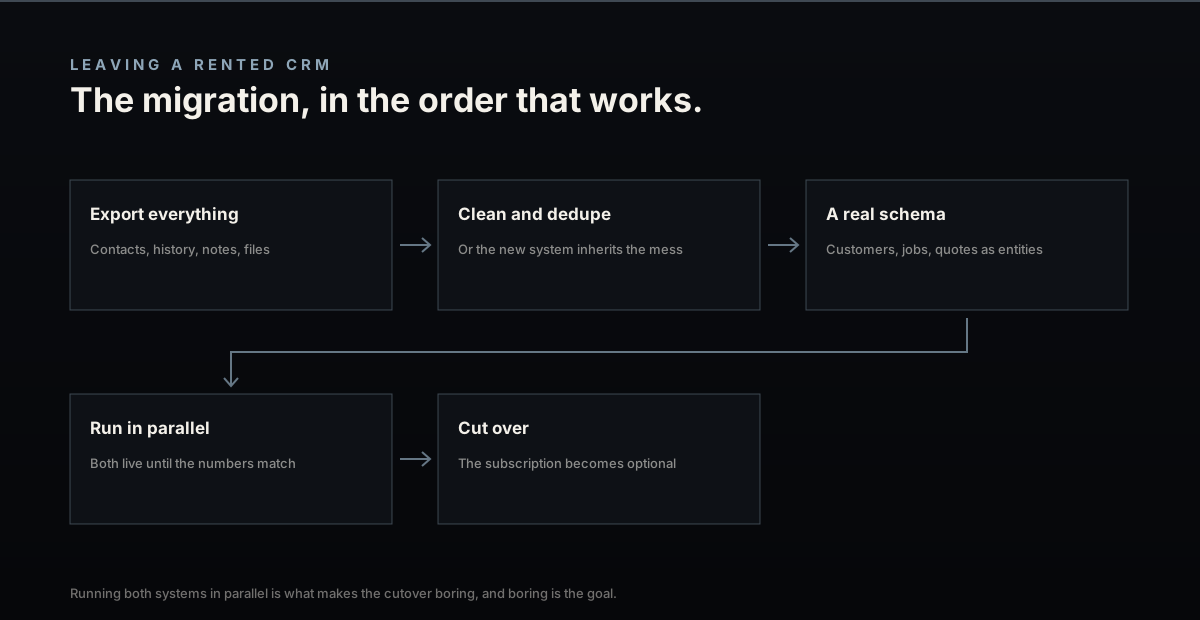
The version of this that fails is a full migration attempted in one step. The version that works is usually incremental: establish your own database as the system of record first, keep the existing tools running against it, then retire them individually as the owned system covers what each one did.
This ordering matters because it front-loads the part with lasting value. Once the customer record is yours and correct, every later decision is reversible. While it lives in someone else's schema, none of them are.
What to establish first
- A database you control, with customers, jobs, quotes, and appointments as real related entities:
- Validation and deduplication at the database level, so the migration does not import the mess:
- An admin view that makes the records usable day to day:
- Integrations to whatever stays, built natively rather than through per-task middleware:
- A documented export path out of your own system, so you never recreate the trap:
Owning the customer record is the decision that makes every later decision reversible. Everything else is an implementation detail.
The goal is not to eliminate every subscription. Some third-party tools are worth paying for indefinitely. The goal is that the thing your business cannot operate without, the record of who your customers are and what they bought, sits somewhere you control and can move.