
GoHighLevel and platforms like it solve a real problem. A local business can have a CRM, a pipeline, funnels, SMS, email, a booking calendar, and review requests running in a week, for a monthly fee that is smaller than one hour of development. That is not a trick. It is a good deal for the first stretch of a business's life, and pretending otherwise is dishonest.
The comparison worth making is not feature against feature. It is what you are left holding when you decide to leave, because that is the moment the two options stop resembling each other.
Data Export Is Not the Same as Portability
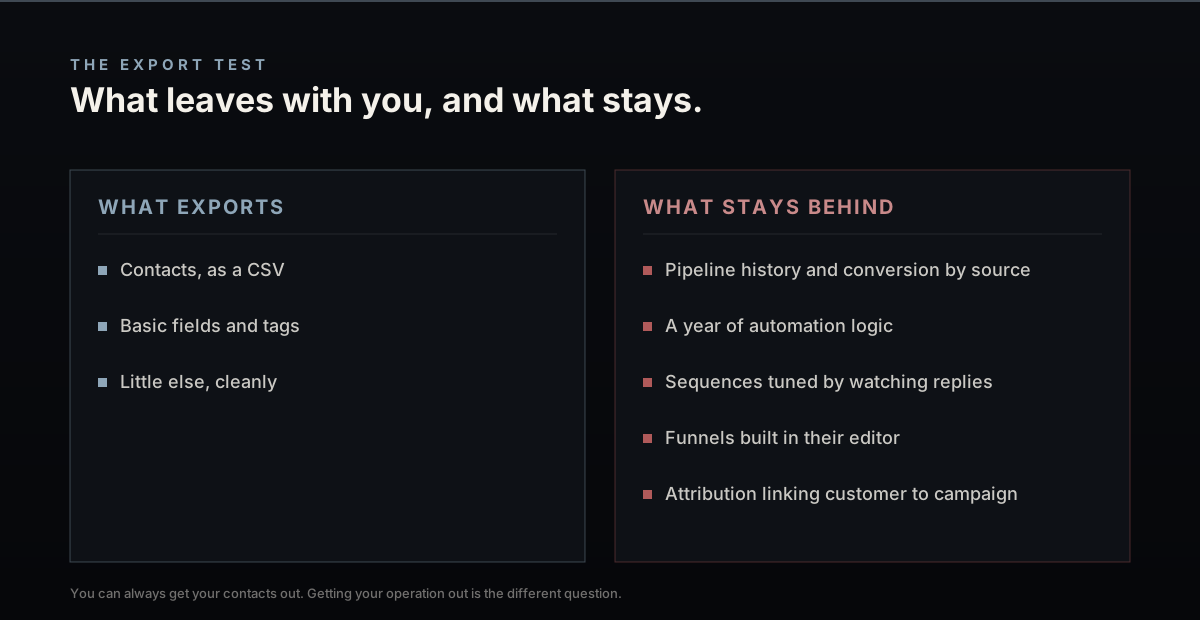
Every serious platform lets you export contacts. That is the part people check before signing up, and it is the least valuable part of what you have built. Contacts are a list of names. The value is in everything wrapped around them.
- Pipeline stages and the history of what moved through them, which is how you know your conversion rate by source.:
- Automations and the branching logic inside them, usually the product of a year of adjustments nobody wrote down.:
- Message templates, sequences, and the timing between steps that you tuned by watching replies.:
- Funnels and landing pages, which are built in the platform's editor and exist nowhere else.:
- Call recordings, SMS threads, and the attribution linking a customer to the campaign that produced them.:
A CSV of contacts carries none of that. It is the difference between exporting your customers and exporting your business. When people describe being stuck on a platform, this is the mechanism, and it works without any vendor doing anything hostile.
You can always get your contacts out. Getting your operation out is a different question, and it is the one that decides whether you are a customer or a tenant.
Where Rented Platforms Are Genuinely Better
Speed. Nothing custom competes with a platform that is configured instead of built. If the goal is to be selling in two weeks, the platform wins and it is not close.
Breadth for the money. The monthly fee buys telephony, deliverability infrastructure, and a hundred integrations maintained by someone else. Rebuilding that surface area is a poor use of capital for a business that has not yet proven the offer.
Someone else's maintenance. When a messaging provider changes its rules, the platform absorbs it. That is worth real money and it never shows up in a build-versus-buy spreadsheet.
Where the Rented Model Starts Costing More Than It Saves
The first limit is fit. A platform models a generic business, and your operation is specific. The gap gets filled with custom fields, tags, and conventions that only work while everyone remembers them. Tag-based logic is a database schema with no validation and no constraints, which is why it drifts.
The second is pricing power over you. Usage-priced messaging, per-seat costs, and tier changes are decisions made by someone whose interests are not yours. The bill grows with your success and you have no lever.
The third is the one people notice last. The customer record, the single asset that outlives every campaign and every tool, sits in a system you do not control. We have written separately about why that record belongs in a database you own and what it takes to move it.
A Fair Decision Rule
- Under roughly a year old, or still testing the offer: stay on the platform. Ownership of a business model you have not validated is worth nothing.
- Stable revenue and the platform fits how you work: stay, and keep a monthly export of contacts and conversation history somewhere you control.
- Stable revenue and you are fighting the platform to model your own operation: the workarounds are now the cost, and they compound.
- The subscription plus usage is a meaningful monthly number and rising: run the comparison properly, including what a migration would cost in the year you finally do it.
- Your competitive advantage lives in how you follow up: that logic should not sit in a system your competitors can rent for the same price.
That last point is the strategic one. If your follow-up sequence is the reason you win, running it on the platform every competitor uses means your advantage is a configuration anyone can copy. Rented software makes you the same as everyone else who rents it.
What Owned Looks Like in Practice
It is not a rewrite of everything. It is a database you control holding customers, jobs, quotes, and appointments as real records with real relationships, an admin interface your team uses daily, and integrations to whichever third-party tools genuinely earn their keep. Telephony and deliverability stay bought. The customer record and the logic around it come home.
Done that way, the platform becomes a component you can replace instead of a foundation you are standing on. That is what the CRM and dashboard work we do is for, and it is why the database design comes first.