
Renting database infrastructure from commercial SaaS providers (such as Salesforce, HubSpot, or industry-specific CRMs) is a long-term risk. These platforms design their onboarding to be highly frictionless, offering free data imports. However, as your transaction volumes grow, you discover the high cost of vendor lock-in. The software licensing costs compound, and extracting your data becomes increasingly difficult.
The Economics of Vendor Lock-In
Research from the MIT Sloan School of Management on software switching costs breaks down vendor lock-in into three areas: contractual ties, integration dependencies, and data write-back constraints. SaaS vendors purposefully use proprietary data structures that do not map to standard relational SQL schemas. When you export your data, you receive a disorganized set of flat CSV files, severing the relationships between customer profiles, booking logs, and invoices.
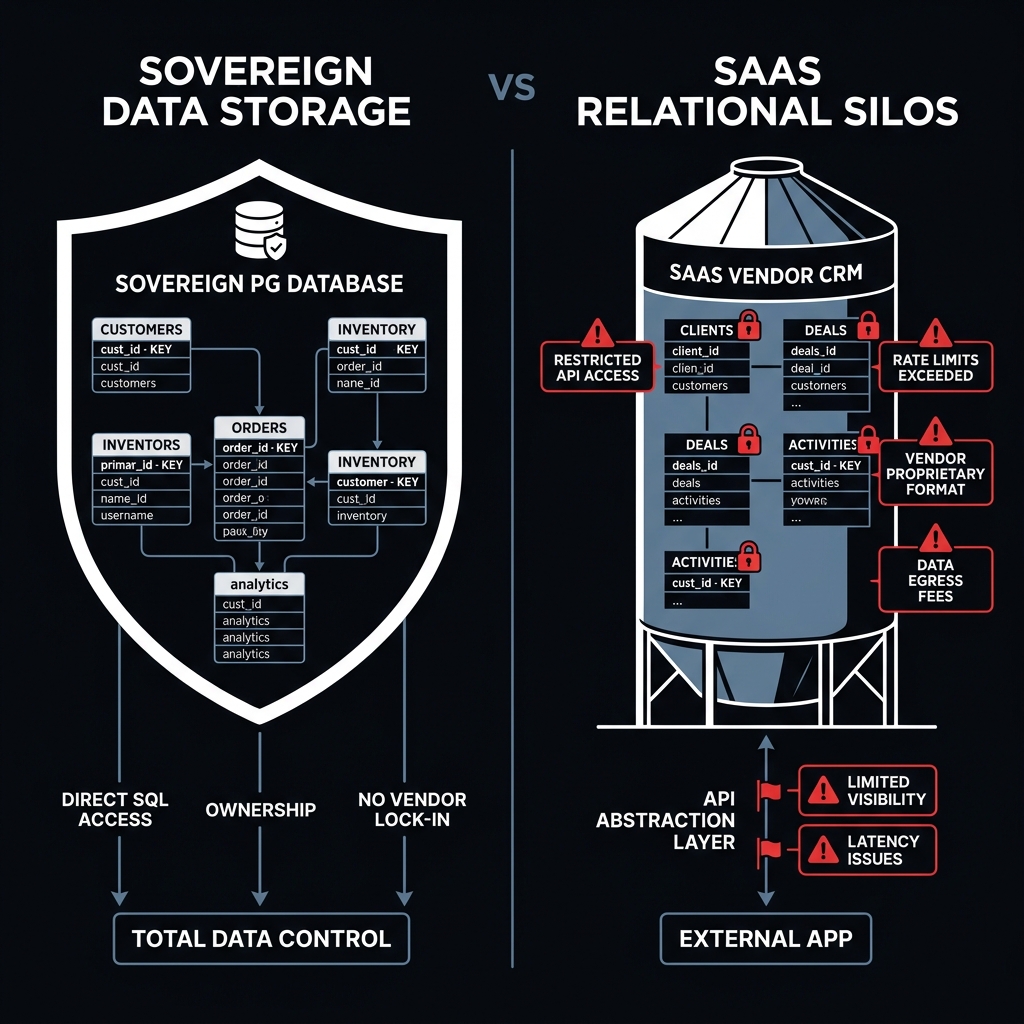
To rebuild these database relationships in a new system, you must hire developers to write manual scripts. This transition cost acts as a barrier, forcing businesses to continue paying high monthly seat fees to avoid a painful migration.
If you do not own the raw database tables and the cloud environment they run in, you do not own your customer relationships.
Case Study: The Salesforce Rate-Limit Barrier
A mid-sized service group attempted to migrate their operations from Salesforce to a custom database. They discovered that Salesforce rate-limits API data exports and charges high fees to extract historical attachments. The export delivered unlinked tables, requiring the company to spend $15,000 on database engineering to clean and reconstruct their records. The vendor used their proprietary schema as leverage to keep the account active.
The alternative is database sovereignty. CASRA deploys standard Postgres or SQL structures directly within your own cloud environment. You retain 100% ownership of the raw data. The user interfaces connect to this central database, ensuring you can change tools without risking your customer history.