
Jobber deserves its reputation. A two-truck operation can go from paper to quotes, scheduling, invoices, and card payments inside a week, for less per month than one small job's margin. For a new or small home-service business, recommending anything else would be malpractice, and nothing below changes that.
The comparison worth writing is about the other end of the curve: what happens as a business grows into shapes the platform was not built to model, and how to tell the difference between a configuration problem and a fit problem.
What Jobber Is Genuinely Best At
- Time to running: days, not months, with no implementation project.
- The core loop, request to quote to job to invoice, handled cleanly for a standard crew business.:
- A mobile experience field staff accept without a fight, which is worth more than most feature lists.:
- A price that a small operation can carry from day one.:
That package is the right trade for most of the market, most of the time. Simplicity is the feature, and it is genuinely hard to build.
Where the Fit Ends
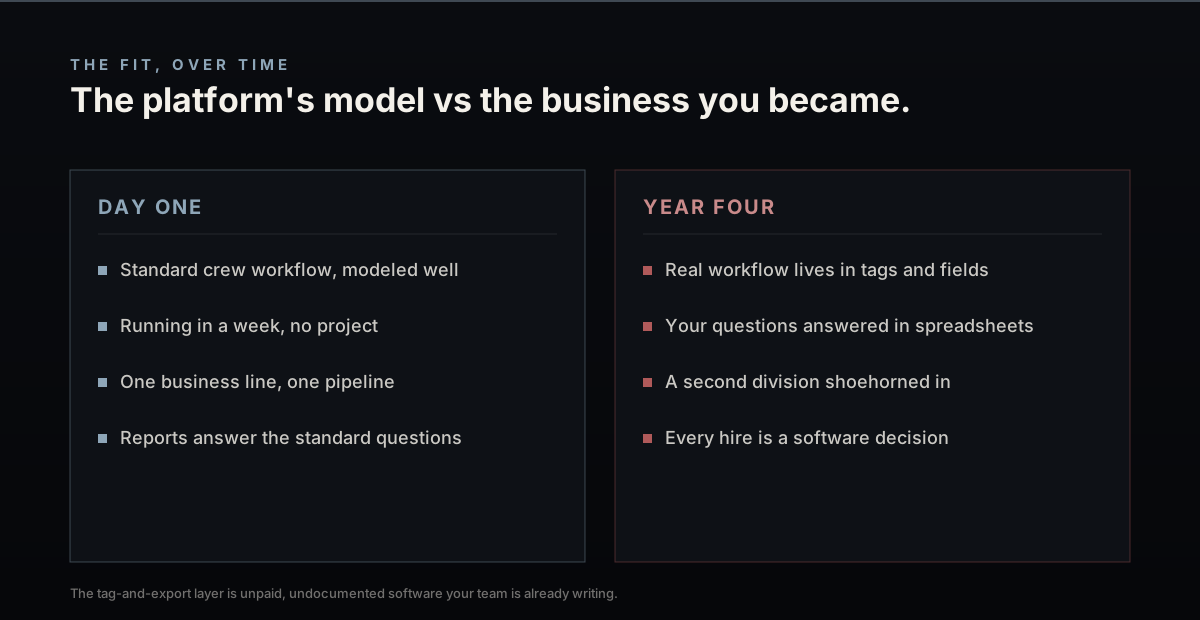
Simplicity has a flip side: the platform models one shape of business, and every way yours differs becomes a workaround. The signals are consistent across companies. The workflow that does not fit gets run through custom fields and tags, which is a database schema with no rules, maintained by convention. Reporting questions that matter to you specifically, margin by crew by job type, quote conversion by lead source, get answered in exported spreadsheets, monthly, by hand. A second business line or a commercial division gets shoehorned into a system priced and shaped for the first. And per-user pricing turns every hire into a software decision.
None of these are Jobber failing. They are a general-purpose tool meeting a business that has become specific, and the tag-and-spreadsheet layer growing around the platform is the measure of the gap. That layer is unpaid, undocumented software your team is already writing. The question is only whether it should keep living in tags and exports or become a real system.
The Decision, Honestly
- Small team, standard workflow, no dedicated office staff: stay. The platform is doing exactly its job.
- Growing, but the friction is process rather than fit: stay, and fix the process. A custom build inherits bad process faithfully.
- The tag-and-export layer is where your real operation lives, and someone maintains it weekly: the build conversation has earned itself.
- Your advantage is a workflow the platform cannot express: that logic is worth owning, because on a rented platform your competitors can rent it too.
The Move Is Rarely a Rip-Out
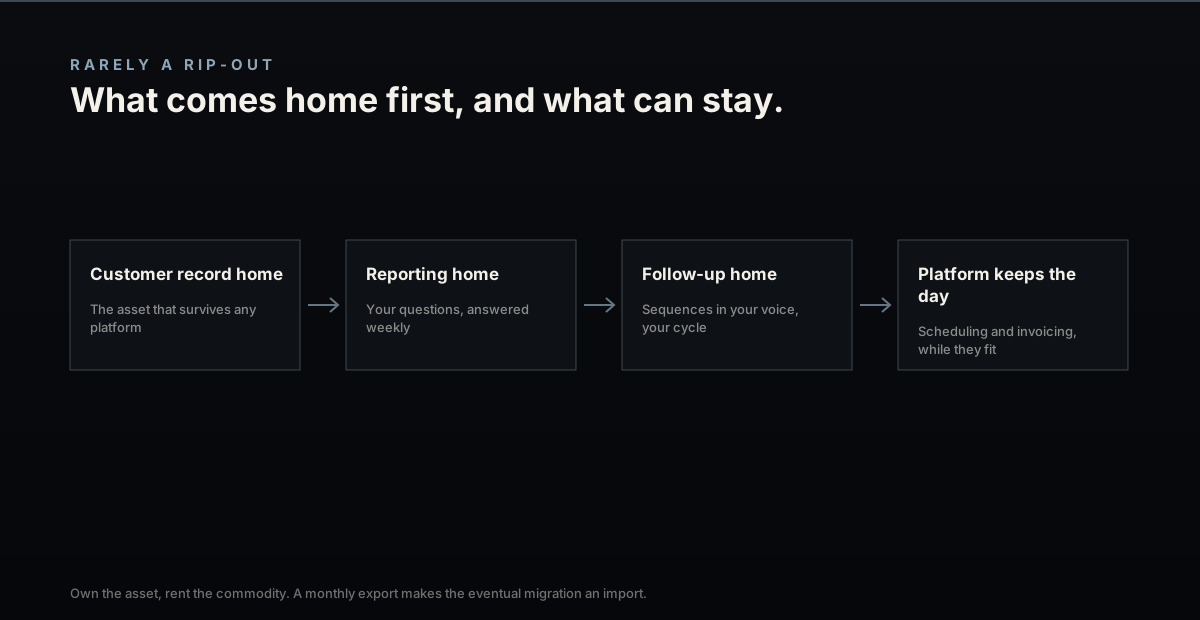
The practical path is usually hybrid, not replacement. The customer database, the reporting layer, and the follow-up automation come home first, because they are where ownership pays fastest: the record survives any future platform change, and the sequences run your way from day one. Scheduling and invoicing can stay on the platform for as long as they fit. This is the same sequence covered in the owned-record analysis: own the asset, rent the commodity, and keep a monthly export from anything rented, so the eventual migration is an import instead of an archaeology dig.