
Housecall Pro's pitch is broader than software: not just running the jobs, but growing the business, with consumer-facing booking, automated review requests, marketing campaigns, and consumer financing wired in. For a home-service company without an office manager, that bundle replaces real headcount, and it works. The examination it deserves is not about whether it works. It is about where each capability lives, and what that means in year five.
The Bundle, Taken Seriously
- Online booking that consumers actually complete, polished beyond what most local companies would build alone.:
- Review automation that fills the profile most owners neglect, doing real local-search work.:
- Card-on-file, financing offers, and instant payouts that smooth cash in a cash-sensitive trade.:
- Marketing campaigns to the customer list without hiring anyone who knows email.:
This is the strongest version of the rented-platform trade: capabilities a small company could not staff, at a subscription. For the first years of a company's life, taking that trade is simply correct.
The Question Underneath: Whose Rails?
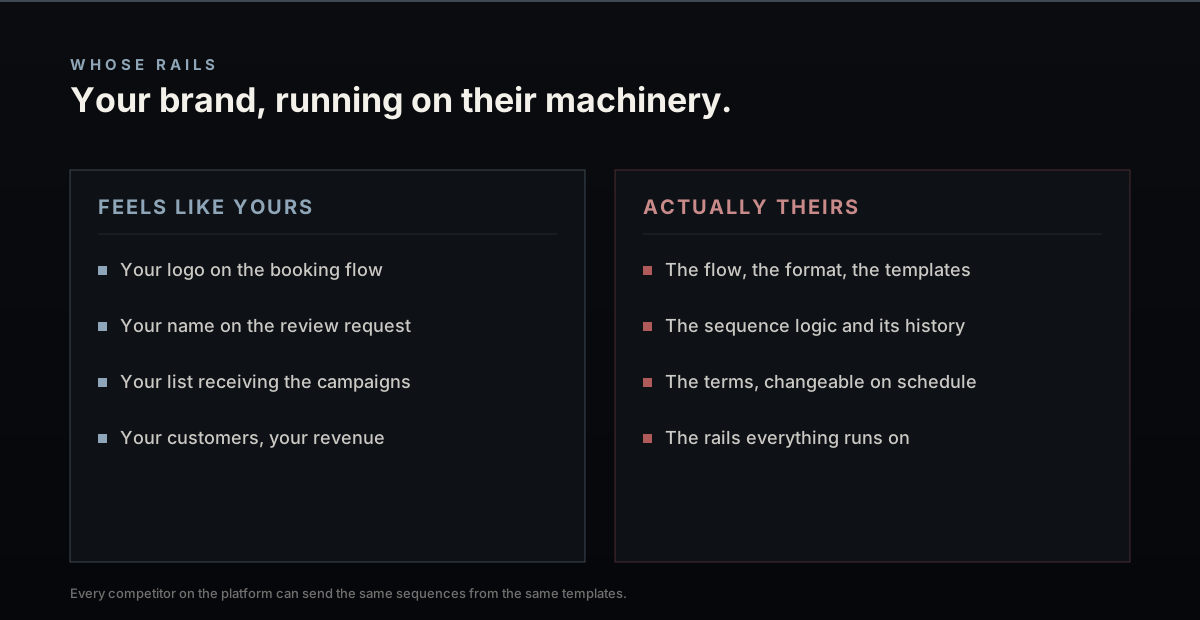
The structural fact to keep in view is that the growth features run on the platform's rails, in the platform's format, under the platform's terms. The booking flow is their flow with your logo. The review sequence, the campaign templates, the customer communications, all are configurations of their machinery, which means your customer experience is, to a real degree, their product. Three consequences follow, slowly.
First, sameness. Every competitor on the same platform can send the same sequences from the same templates, so none of it differentiates. Second, the deepening dependence: the more of the customer relationship runs through the platform, the more the eventual export gap costs, because sequences, automations, and campaign history are precisely the things a CSV does not carry. Third, pricing power: a platform that holds your schedule, your payments, and your customer communications is a platform whose price increases you will pay, because leaving means rebuilding the relationship layer, not just the calendar.
Reading Your Own Position
- If the platform's marketing features sit unused, you are paying for the bundle and using the calendar. Price that honestly against simpler tools.:
- If they are heavily used, the customer relationship increasingly lives on rented rails. Keep a monthly export of everything exportable, and know what does not export.:
- If your growth has outrun the templates, if how you follow up IS your edge, that layer is worth owning outright.:
- Whatever else, the customer record itself belongs somewhere you control. The platform can keep running the day while the asset lives at home.:
The Owned Version, Scoped Sanely
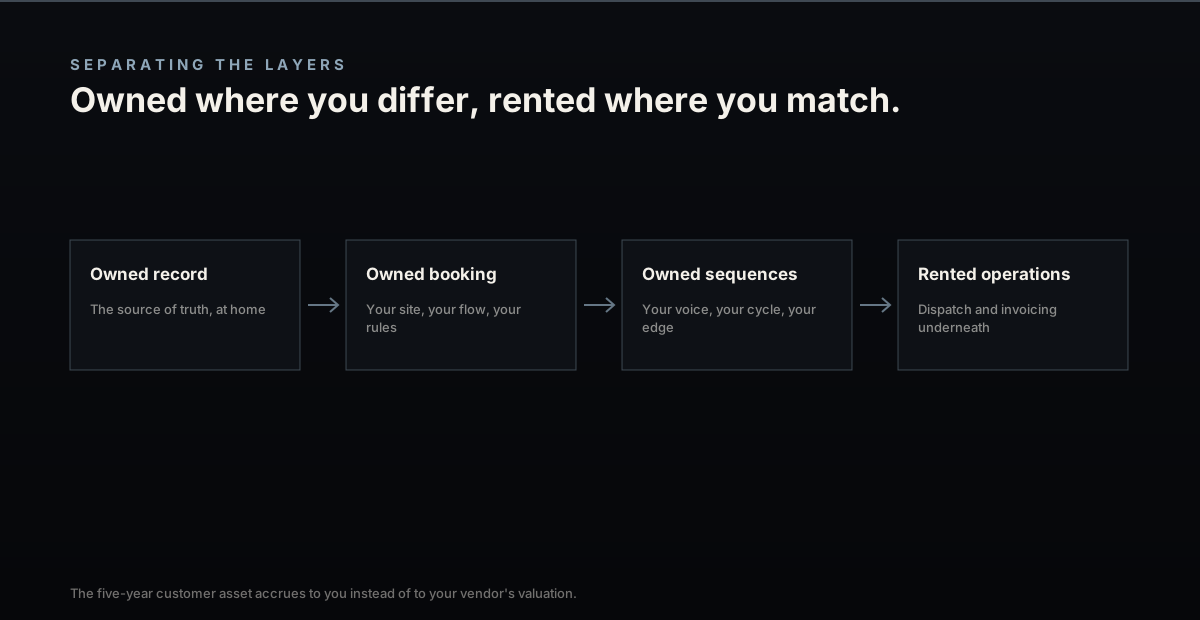
The alternative is not rebuilding Housecall Pro, which would be a poor use of money. It is separating the layers: an owned customer database as the source of truth, your own booking flow on your own site shaped by your rules, sequences written for your voice and your cycle, with the platform, or any platform, doing dispatch and invoicing underneath. Owned where you differ, rented where you match everyone else. The companies that make this split stop asking permission for their own growth motion, and their five-year customer asset accrues to them instead of to their vendor's valuation.