
ServiceTitan sits at the top of the trades software market on merit: dispatch at scale, call recording and booking scorecards, price book management, marketing attribution down to the campaign, financial reporting that satisfies a CFO. Large operations run on it because nothing else models an operation that large. That is the honest starting point.
The comparison that matters is not CASRA versus ServiceTitan at fifty trucks, where the platform wins. It is the mid-size shop deciding whether to climb onto the enterprise, and what the climb actually costs and returns at their size.
What the Enterprise Buys You
- Process depth: the platform encodes how a large shop should run, and adopting it imports that discipline.
- Visibility: booking rates, technician performance, campaign attribution, margin by job, measured continuously.
- Scale headroom: the system will not be outgrown at any size a trades company realistically reaches.
- An ecosystem of integrations, consultants, and trained hires that only market leaders accumulate.:
What the Climb Costs
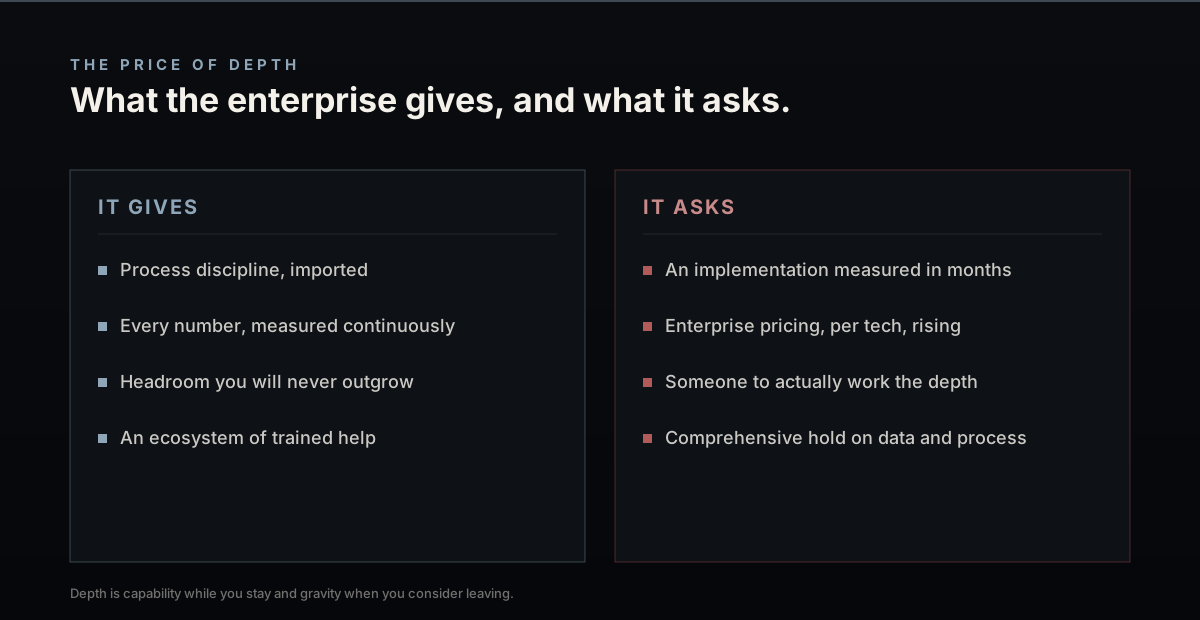
The costs are structural rather than hidden. Implementation is a project measured in months, with data migration, price book construction, and process redesign before value arrives. The subscription is priced for businesses with the margin structure of an enterprise, per technician, forever, and it rises as you grow. And the depth is only worth its cost if someone works it: dashboards nobody reads and scorecards nobody coaches from are expensive decoration. The recurring pattern in the mid-market is a shop paying for the full instrument and playing three notes, at which point the honest description is renting an enterprise to use a scheduler.
There is also the familiar ownership line, sharpened by depth: the more of your operation the platform models, the more comprehensive its hold on your data and process, and the more a future migration costs. Depth cuts both ways. It is capability while you stay and gravity when you consider leaving.
Three Shops, Three Right Answers
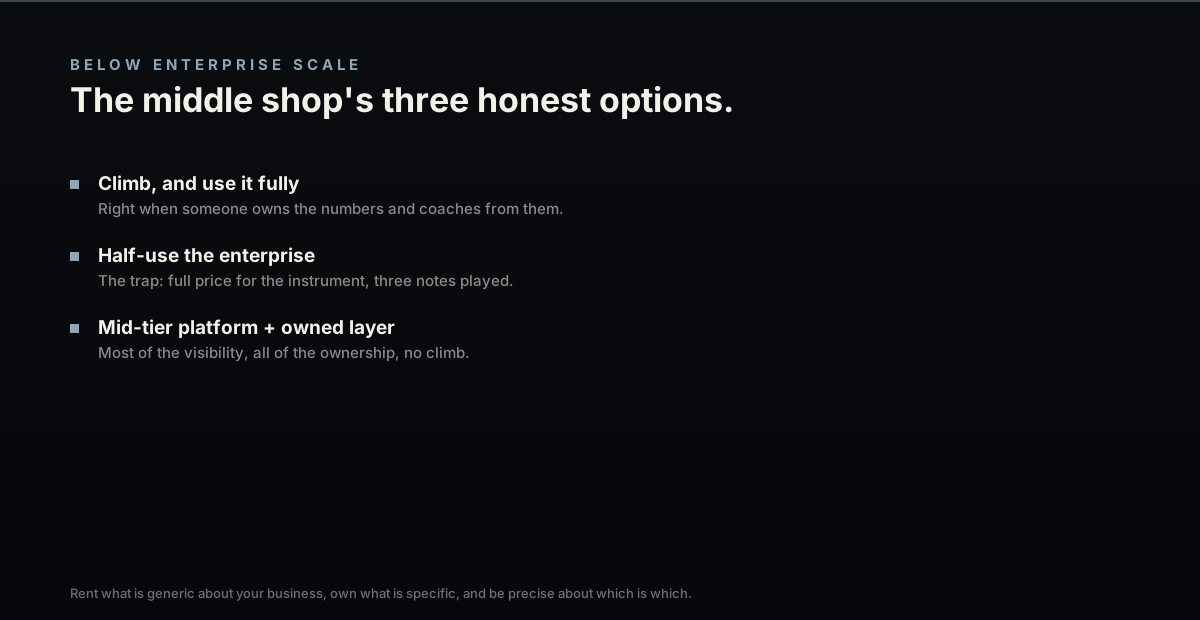
- Large, professionally managed, someone owns the numbers: the enterprise platform earns its price. Use it fully and this comparison is over.
- Mid-size, growing, but the depth would go unworked: a simpler platform plus an owned data and follow-up layer usually beats half-using the enterprise, at a fraction of the recurring cost.
- Specific: your model diverges from the standard shop, commercial mix, unusual sales motion, multi-brand. The platform's model is its strength and its constraint, and divergence is the strongest build signal there is.
The Middle Path, Concretely
For the shop in the middle, the alternative to the climb is targeted ownership: keep scheduling and dispatch on whatever mid-tier platform fits, and build the layer where the enterprise value actually was, one customer database across all lines of business, the reporting that answers your specific questions weekly without exports, and the follow-up engine running your sequences. That is most of the visibility and all of the ownership, without the implementation project or the per-truck price of admission. The general economics are the ones laid out in the rented-stack analysis: rent what is generic about your business, own what is specific, and be precise about which is which.