
Ask what an independent insurance agency owns and the honest answer is: the book. Not the office, not the carrier appointments, which can be re-shopped, but the record of who its clients are, what they hold, and when it renews. The book is the asset that sells when the agency sells. Which makes it remarkable how many agencies hold that asset the way they would never let a client hold a risk: scattered, unexamined, and backed up nowhere.
Where the Book Actually Lives
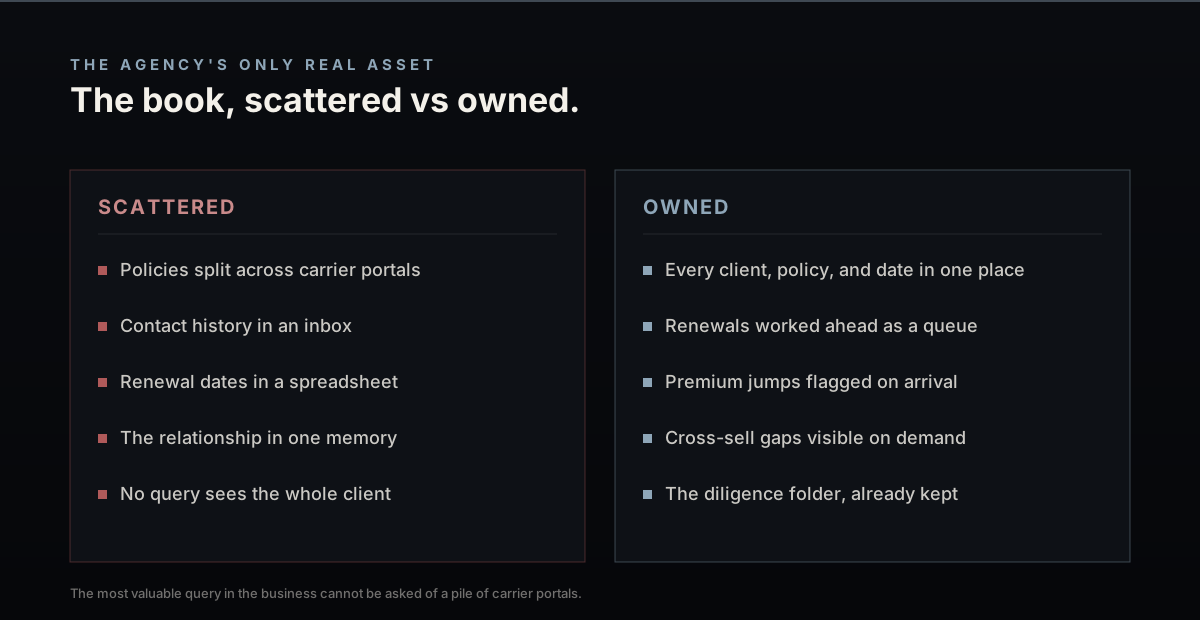
At a typical agency, policy detail lives in each carrier's portal, contact history lives in an inbox, the renewal calendar lives in a spreadsheet someone maintains when there is time, and the relationship itself lives in the principal's memory. Every carrier portal is complete for its own slice and blind to the rest, so nobody can see the client, only their fragments. The question which clients have their home with us but their auto elsewhere, the single most valuable query in the business, cannot be asked of any system the agency runs.
Renewals Are Where Agencies Are Quietly Robbed
Retention is the economics of the whole model: an agency keeps a book by keeping renewals, and loses it one un-shopped renewal at a time. The dangerous moment is the premium jump. A client whose renewal arrives 30 percent higher, with no call from their agent explaining or re-shopping it, has just been taught that the agent adds nothing. The direct-writer ad they see that week finishes the job.
- Every policy's renewal date in one queue, worked ahead of the date, not discovered at it.:
- Premium changes flagged the day carrier paperwork lands, so the jump call happens before the client opens the mail.:
- The re-shop offered proactively on every meaningful increase. The call that costs a commission percentage protects the whole account.:
- A touch cadence between renewals, because an agent heard from once a year at billing time is a line item, not an advisor.:
All of it depends on the same precondition: renewal dates, premiums, and holdings in one queryable place. The process is easy. The database is the hard part, which is exactly the pattern covered in the analysis of owned customer records.
Cross-Sell Is a Query, Not a Campaign
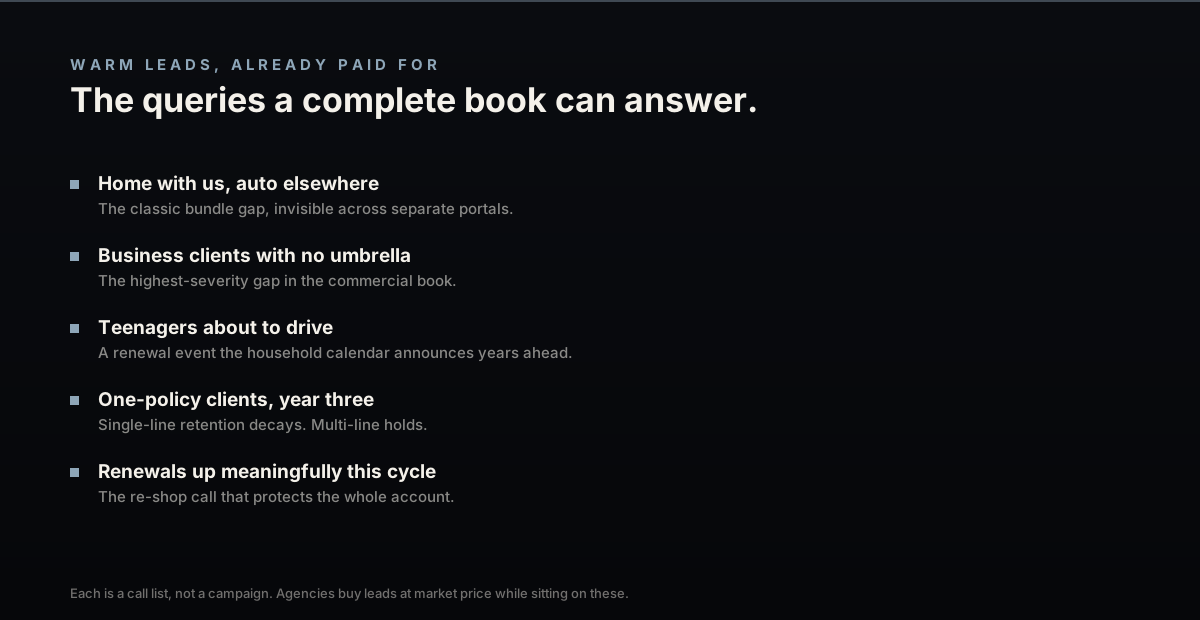
The cheapest growth in insurance is the second policy to an existing client: the trust exists, the acquisition cost is zero, and multi-line clients retain dramatically better. But the opportunity is invisible without the data. Which auto clients own homes. Which business clients have no umbrella. Which clients' teenagers are about to become drivers. Each is a query against a complete book, and a campaign only in the sense that the answer becomes a call list. Agencies buy leads at market price while sitting on a list of warm ones they cannot see.
The Book as an Owned Asset
There is a valuation argument hiding under the operational one. An agency sells for a multiple of its book, and a book that is demonstrably retained, documented, and worked commands the top of the range. A buyer inheriting a database with every client, policy, interaction, and renewal outcome is buying a machine. One inheriting carrier logins and a principal's memory is buying a rumor. The same system that runs the renewals is, years later, the diligence folder.
Agency management systems exist and handle the policy accounting. The gap is the relationship layer: the renewal queue with its flags, the cross-sell queries, the touch sequences, the client-facing service that makes staying easy. That layer is where an agency differs from the one across town, and it is worth owning outright, because it is the part of the book that is actually yours.