
When a customer calls your office and is greeted by name, it builds immediate authority. When a technician shows up at their door already knowing their service history, it builds trust. However, if your database is cluttered with duplicate profiles, outdated addresses, and separated booking logs, you risk sending the wrong invoice or shipping to the wrong location, damaging customer relationships.
The Financial Cost of Poor Data Quality
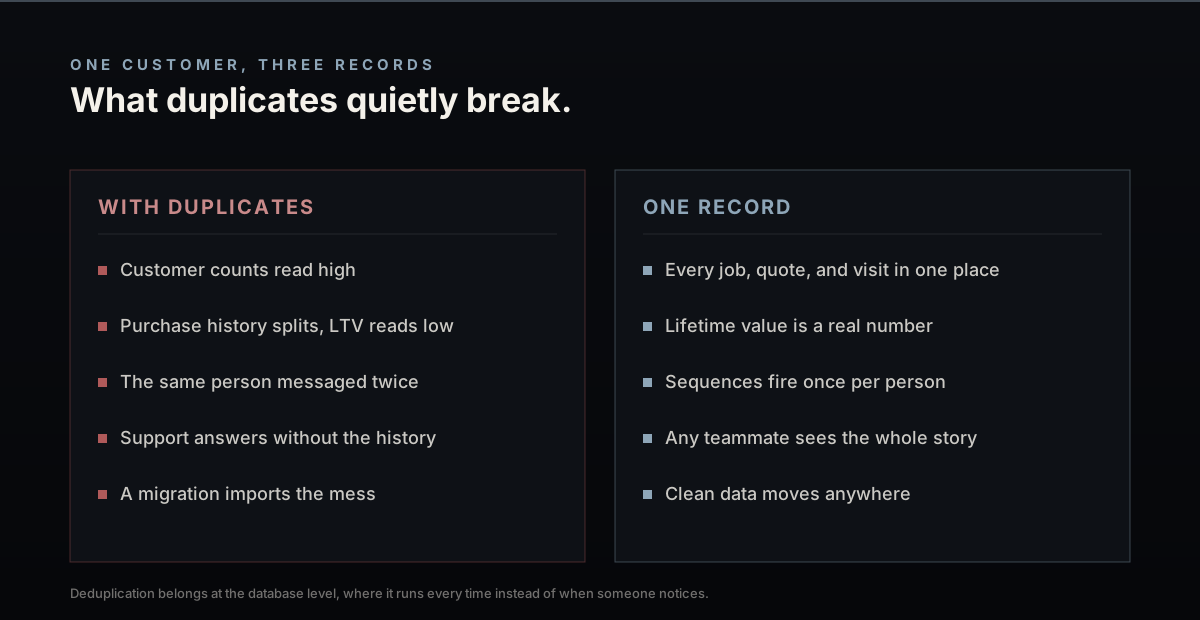
Reports from TDWI (The Data Warehousing Institute) estimate that poor data quality costs US businesses over $600 billion annually in wasted postage, staff inefficiencies, and lost customer value. In a service business, duplicate records occur when the intake system lacks strict validation rules. If an admin enters 'John Smith' and another enters 'Jon Smith' for the same customer, the database creates two profiles, splitting their booking history and invoices.
[Record A: "John Smith" (512-555-0199)] --+
                                           |--> [Fuzzy Match Checker] -> Merged Record
[Record B: "Jon Smith"  (512.555.0199)] --+
Duplicate records split your customer memory. If you cannot query a client's complete service history in one file, you do not have a customer database.
Writing a Deduplication Database Trigger
To prevent duplicate profiles, the database must execute checks prior to writing client records. Below is a PostgreSQL trigger function illustrating how to check for existing customer matches based on clean phone numbers (stripping dashes, dots, and spaces) before saving a new record:
CREATE OR REPLACE FUNCTION check_customer_duplicates()
RETURNS TRIGGER AS $
BEGIN
  IF EXISTS (
    SELECT 1 FROM customers
    WHERE regexp_replace(phone, '[^0-9]', '', 'g') = regexp_replace(NEW.phone, '[^0-9]', '', 'g')
  ) THEN
    RAISE EXCEPTION 'Customer record with phone number already exists.';
  END IF;
  RETURN NEW;
END;
$ LANGUAGE plpgsql;
By running these automated deduplication checks, you protect your database integrity, ensure technician data remains accurate, and improve customer communications.