
Cleaning is the rare service business built on recurring revenue. The same offices every night, the same houses every other Thursday. On paper that is the most predictable operation in the trades. In practice, the predictability is exactly what makes the failures expensive: a missed visit is not one lost job, it is a crack in a contract that pays every month.
The Schedule Is a Living Thing
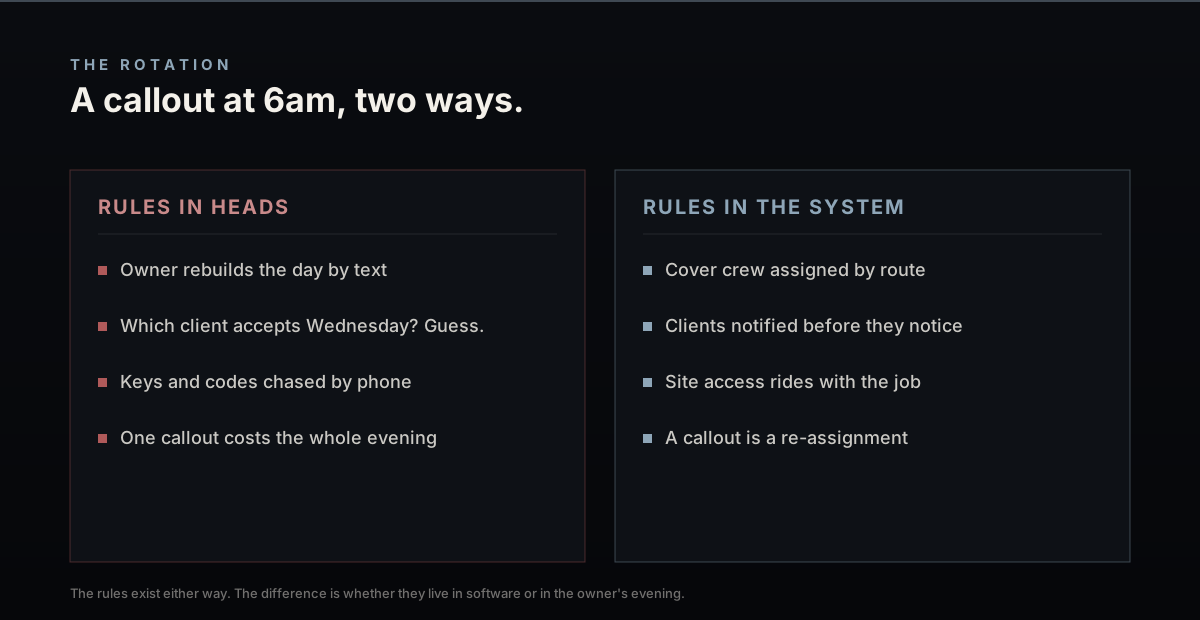
A one-off trade schedules a job. A cleaning company maintains a rotation: dozens of standing appointments, each with a frequency, a crew, a key or a code, and a client who notices when Tuesday becomes Wednesday. Every crew callout, every client reschedule, every added deep-clean ripples through the week, and coordinating the ripple by text message is a full-time job that scales with every contract signed.
The system fix is a schedule that knows the rules: which crew holds which route, what happens when someone calls out, which clients accept a different day and which cancel over it. When the rules live in software, a callout becomes a re-assignment instead of an evening of phone calls, and the owner stops being the scheduler.
Disputes Are a Proof Problem
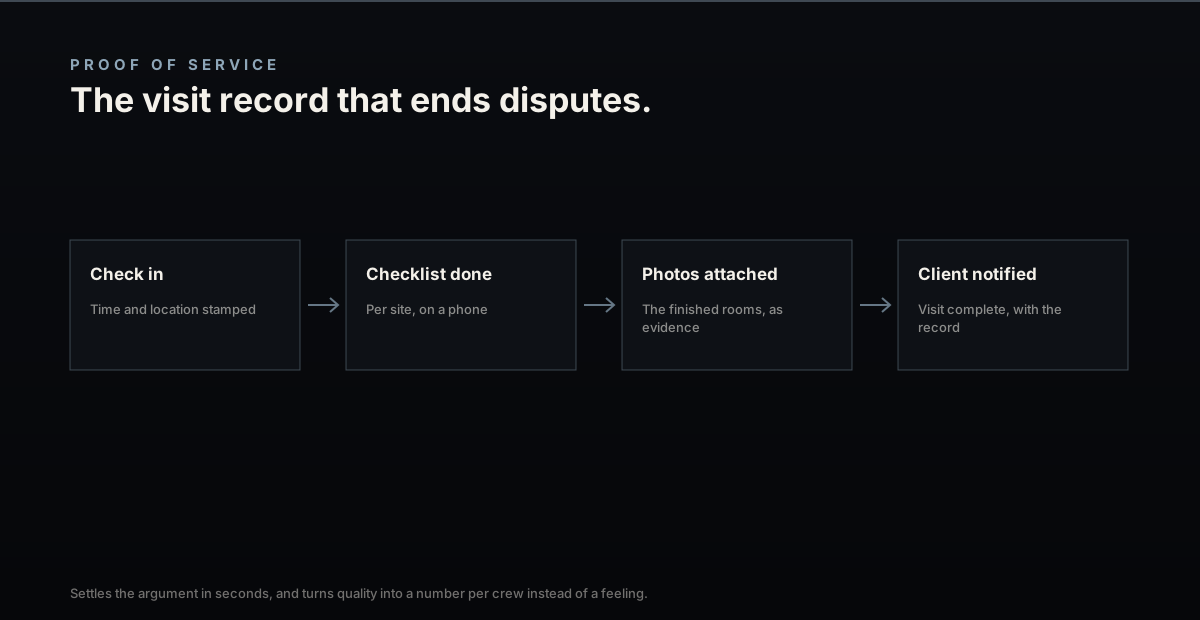
The recurring nightmare of the trade: the client says the crew never came, or came and missed the kitchen. Without evidence, every dispute is a credit, and credits against a monthly contract compound into real money. The fix is boring and completely effective: check-in and check-out stamped by time and location, a checklist per site completed on a phone, and photos of the finished rooms attached to the visit.
That record does double duty. It settles disputes in seconds, and it turns quality into a number per crew instead of a feeling. A crew whose checklists drift gets coaching before a client churns, which is the difference between managing quality and discovering churn.
Where Cleaning Companies Actually Churn
- A missed or moved visit with no proactive notice. Silence reads as disrespect on a service the client barely thinks about.:
- The same small miss three visits running, because feedback had nowhere to land.:
- An invoice that does not match what was delivered after a schedule change.:
- A price increase with no history of documented value behind it.:
Each of these is preventable with the visit record above plus notification automation: the client hears about a change before noticing it, feedback attaches to the site file, and the renewal conversation arrives with a year of completed checklists behind it.
The Commercial Bid Is Won Before the Walkthrough
Janitorial contracts are decided by facility managers comparing three bids that all promise reliability. The bid that arrives with the operational story, how visits are verified, how callouts are covered, what the client portal shows, is making a different argument than a price per square foot. The software is not back-office here. It is the product being sold, and the company that can demonstrate it wins ties and survives being slightly more expensive.
The stack: route-aware recurring scheduling, crew apps with proof of service, client notifications, and an owned record of every site, visit, and issue. Rented tools cover pieces of it; the companies that dominate a metro tend to be running something shaped exactly like their operation, because at two hundred standing visits a week, the operation is the product.