
Square Appointments wins its market segment for a structural reason: it sits on top of the payment system a small service business may already run. Booking, card on file, no-show protection, and the register are one account, one report, one brand. For an independent operator or a small team selling appointments that one person delivers, it is close to unbeatable, and this comparison concedes that segment without a fight.
Where the Payment-Rails Advantage Runs Out
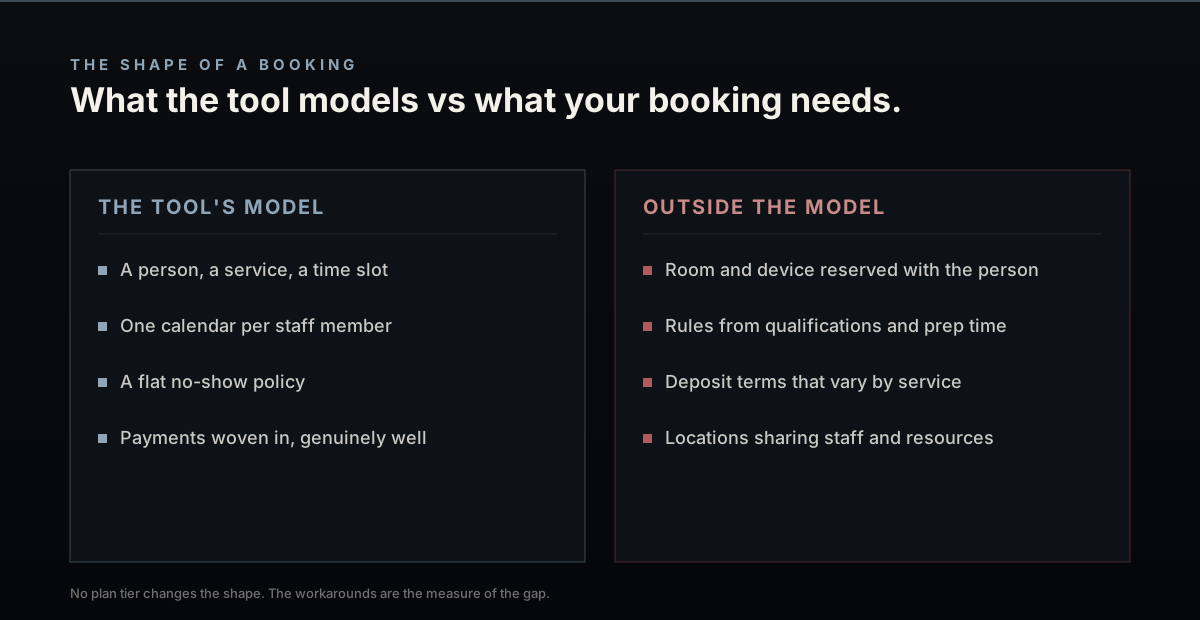
The product models an appointment as a person, a service, and a time slot, because for its core market that is the whole truth. The businesses that outgrow it are the ones whose bookings stop fitting that shape: an appointment that must reserve a room and a machine along with the person, availability rules that depend on qualifications or prep time, deposits with terms more specific than a flat policy, or several locations sharing staff and resources. Each is representable in a calendar-shaped tool only as a workaround, and the workarounds are exactly the double-booked laser or the surgery slot lost to a nail trim that the booking cluster's other articles walk through trade by trade.
There is also the record question, gentler here than with marketing-heavy platforms but still real: the customer list, visit history, and card relationships live inside the ecosystem. Convenient while you stay, and part of the price of leaving, because the switching cost of a payment ecosystem is deliberately the point of one.
The Honest Decision Table
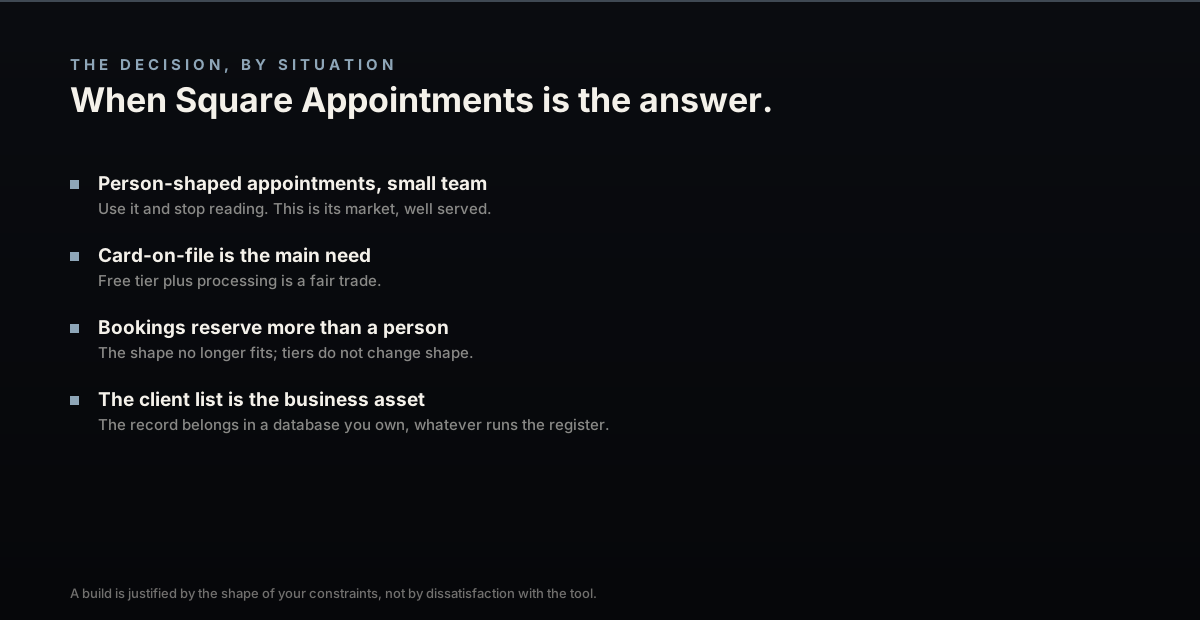
- One person, or a small team, delivering person-shaped appointments: use Square Appointments and stop reading.
- Deposits and card-on-file are your main need: it does this well. The free tier plus processing is a fair trade.
- Bookings reserve more than a person, or rules depend on more than a calendar: the shape no longer fits, and no plan tier changes the shape.
- Multi-location with shared resources, or the client list is the business asset: the record belongs in a database you own, whatever runs the register.
Keeping the Register, Owning the Rest
As with every platform in this series, the endgame is rarely dramatic. Square can keep the payments, it is genuinely good at payments, while the booking engine that models your actual constraints and the customer record that compounds over years move to systems shaped for them. A build is justified by the shape of your constraints, not by dissatisfaction with a tool that was never designed to hold them.