
A barbershop sells chair-hours. There is a fixed number of them each week, they cannot be stored, and an hour that goes unsold is not recoverable. Every operational question reduces to keeping those hours full at a reasonable price, which is why the booking system is closer to the center of the business than it looks.
No-Shows Are the Largest Single Leak
A no-show at four in the afternoon on a Saturday is the most expensive thing that happens in a barbershop, and it is the one most shops treat as weather. It is not weather. It responds to two levers.
- A reminder at the right interval. Not one at the time of booking, which is forgotten, but one close enough to the appointment to prompt action while leaving time to refill the slot.:
- A deposit or a card held at booking. This is the lever most independent shops decline to pull and the one that works.:
- A cancellation window with terms that are stated up front and applied consistently.:
- A waitlist that can be offered the slot automatically the moment it opens, which is the only thing that recovers the hour.:
The objection to deposits is that customers will object. Some do. The shops that hold their nerve find the ones who object were disproportionately the ones not turning up, and the schedule gets more predictable, not emptier. We looked at the wider numbers on attendance separately.
Rebooking Is the Second
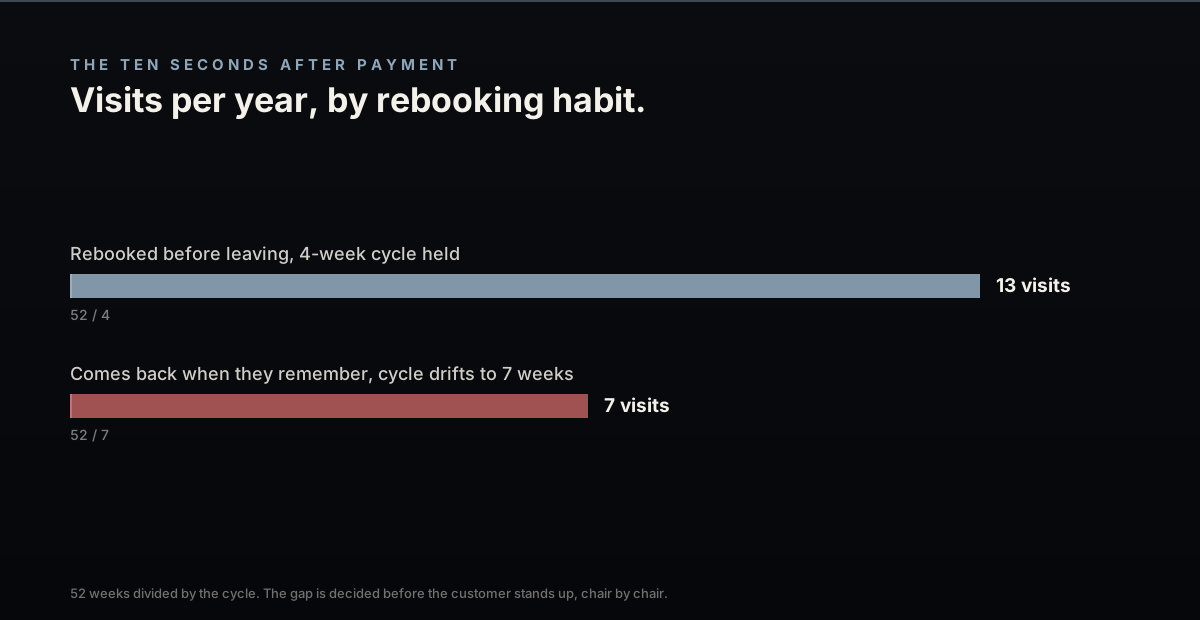
A customer on a four-week cycle who is not rebooked before leaving becomes a customer who comes back in seven weeks, or does not come back. Across a year that difference is several visits per client, and it is decided in the ten seconds after payment.
The system fix is to know the cycle. If the record shows someone comes in every four weeks and it has been six, that is a message worth sending, and it should be sent by software, not by whoever happens to notice. That is database reactivation applied to a very short cycle, and it works better here than almost anywhere because the interval is so regular.
The most valuable customer in a barbershop is the one already sitting in the chair, and the moment to secure the next visit is before they stand up.
What a Shop Needs
- Booking by barber, because customers book a person and not a shop, and the system has to respect that preference without stranding walk-ins.:
- Service durations that reflect reality, including the difference between a regular cut and a first visit.:
- Deposits or card capture at booking, with terms applied automatically.:
- Reminders, and a waitlist that fills a cancelled slot without anyone making calls.:
- Customer history: what they had, who cut it, how often they come in.
- A record the shop owns, so the client list survives a change of software or a barber leaving.:
That last point is the one owners regret ignoring. When the booking platform holds the client list and a barber leaves with their own following, the question of whose customers those are becomes concrete very quickly. A shop with its own database has a different conversation than one asking a vendor for an export.
Buy Before You Build
For a single shop with two or three chairs, an off-the-shelf booking product is the right answer and building would be indulgent. The case for building starts with multiple locations, a membership model, or a booking flow that has become a real competitive advantage. It also starts, more often than owners expect, with the realisation that the client list is the asset and it is currently somebody else's.
When it does make sense, the work is a booking engine that models chairs and barbers properly, a site that loads fast enough to book from a phone on the street, and a customer database that belongs to the shop.