
Zapier is a great tool for building quick prototypes. It allows you to link APIs and create automation triggers without writing code. However, as a business scales and transactional volume grows, relying on Zapier to connect your core booking engine, CRM, and SMS notification systems introduces significant technical debt.
The Complexity and Fragility of Middleware
Research published by the IEEE Computer Society on software architecture complexity notes that using third-party middleware to link separate databases increases system fragility. Each connection in a Zapier flow (triggers, filters, actions) depends on external APIs. If one software provider updates their API payload or changes their authentication protocols, your entire flow breaks. These breaks often happen silently, with no notifications until customer records are missing or a notification fails to send.
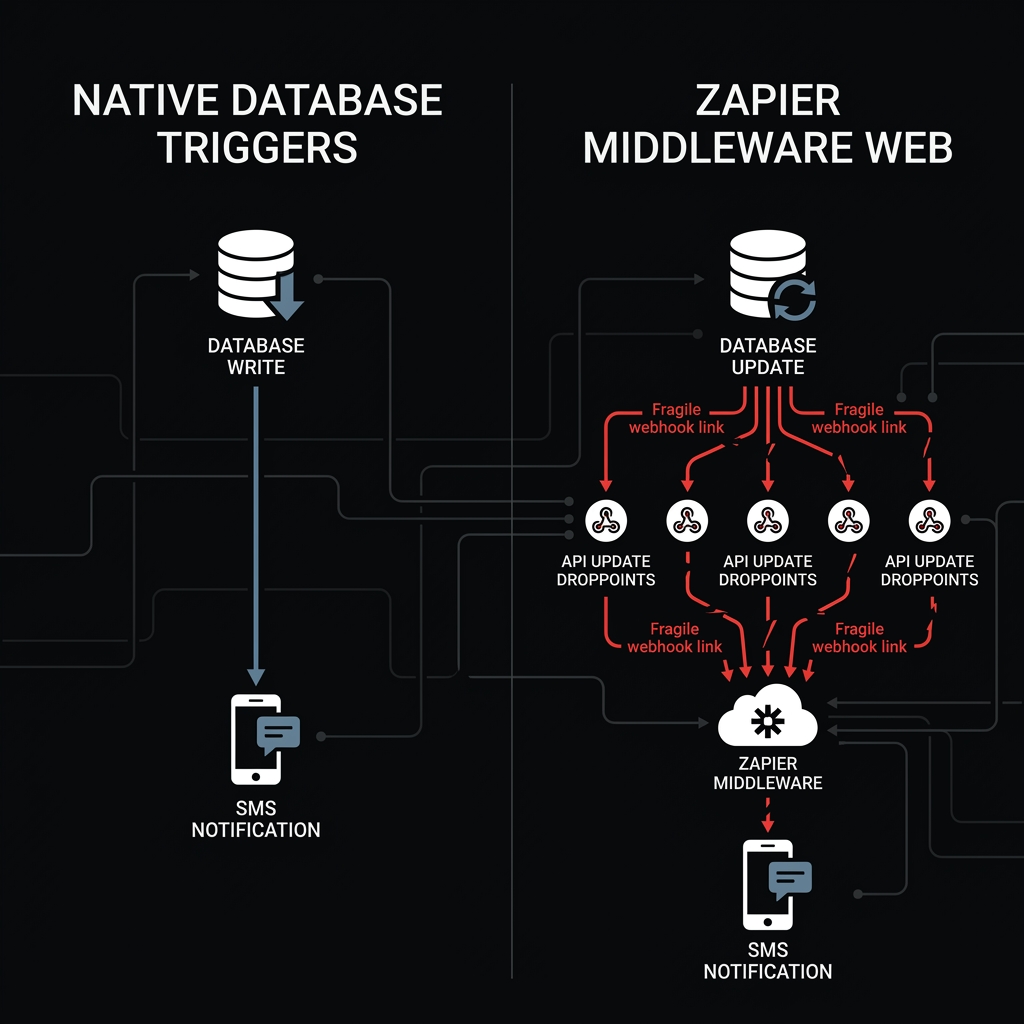
Zapier is a band-aid for systems that cannot talk to each other natively. Scaling on middleware is like building a house on extension cords.
Replacing Middleware with Native Webhook Receivers
To build a stable operating system, the booking engine should send payload events natively to a custom webhook receiver, updating databases and notifications inside a single backend script. Below is a sample Node.js Express webhook showing how to receive, validate, and write a booking event directly to PostgreSQL, bypassing Zapier entirely:
app.post("/webhooks/booking-completed", async (req, res) => {
  const { customerId, bookingTime, assignedTechId } = req.body;
  try {
    await db.query(
      "INSERT INTO service_bookings (customer_id, scheduled_time, assigned_tech_id, status) VALUES ($1, $2, $3, 'scheduled')",
      [customerId, bookingTime, assignedTechId]
    );
    res.status(200).send({ status: "success" });
  } catch (error) {
    console.error("Database sync failed:", error);
    res.status(500).send({ error: "Internal write failure" });
  }
});
We replaced their middleware stack with a unified database structure running on a Node.js/PostgreSQL engine. All lead intakes, booking requests, and SMS updates were routed natively through database triggers. The transition cut their middleware costs to $0, eliminated duplicate records, and resolved their sync errors. The system now runs on a stable, self-contained backend that requires zero maintenance.