
When a customer searches for a service provider, they typically open multiple tabs and submit quote requests to three or four companies. In this environment, response speed is the primary driver of conversion. The provider who contacts the lead first almost always wins the contract.
Analyzing Lead Decay Timelines
Data from InsideSales.com's Lead Response Management Study shows that the odds of contacting a lead are 100 times higher if the response occurs within 5 minutes compared to 30 minutes. The odds of qualifying that lead are 21 times higher. If you wait longer than 10 minutes to reach out, your conversion probability drops to near zero. The customer has already booked with a competitor.
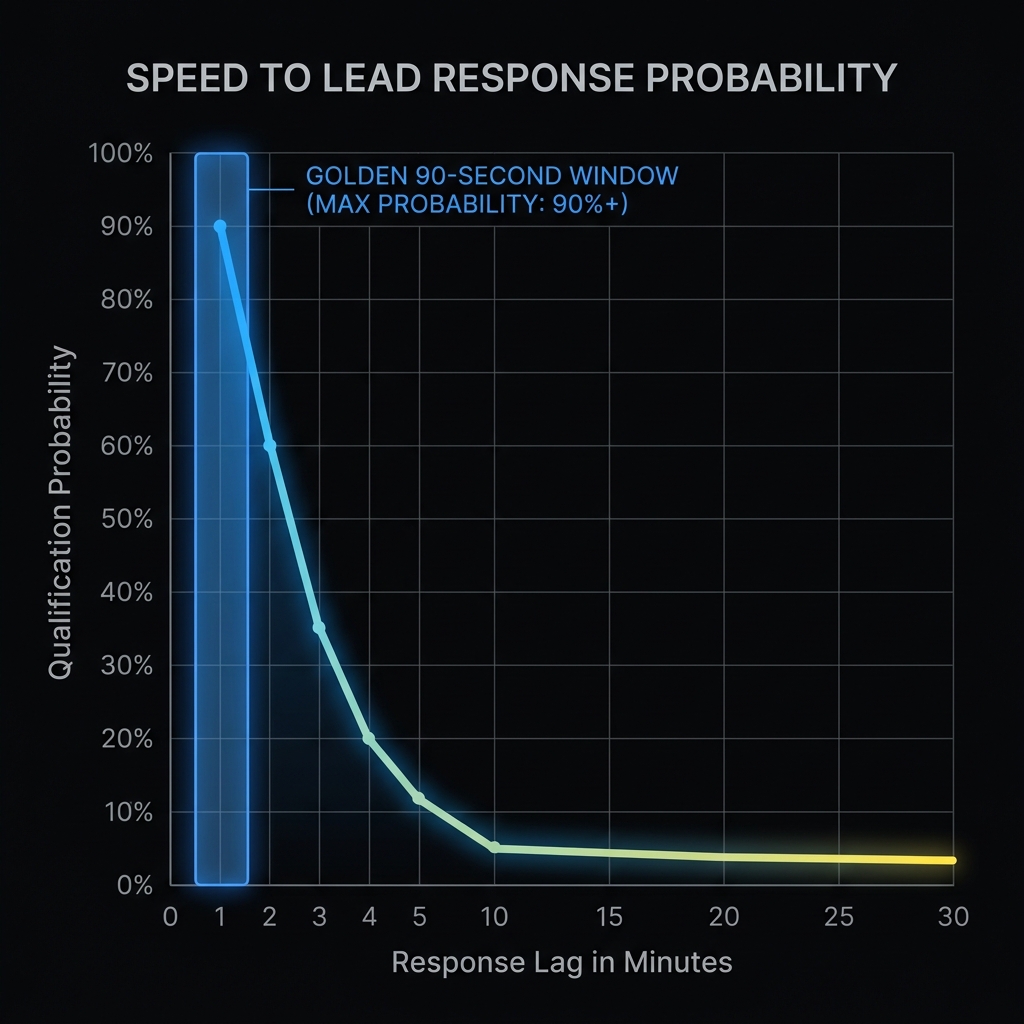
A lead is a perishable asset. Its value decays by 90% in the first fifteen minutes of silence.
Building a 90-Second Response Loop
To capture high-intent leads, you must automate the initial contact. The moment a quote request is submitted, the system should trigger a personalized SMS response within 90 seconds. Below is a Node.js trigger script demonstrating how to process inbound webhook events and dispatch an immediate SMS follow-up:
app.post("/api/leads", async (req, res) => {
  const { name, phone, serviceNeeded } = req.body;
  // Save lead to Postgres database
  const lead = await db.saveLead({ name, phone, serviceNeeded });
  // Dispatch instant SMS within the golden 90-second window
  setTimeout(async () => {
    await sendInstantSMS(phone, `Hi ${name}, received your request for ${serviceNeeded}. Do you have 2 minutes for a quick call to review details?`);
  }, 1500); // 1.5 second trigger
  res.status(201).send({ status: "Lead queued successfully" });
});
This automated touchpoint initiates a live conversation immediately. By engaging the customer before they can search for other options, you raise your lead conversion rate and lower your overall customer acquisition costs.