
Roofing has a demand curve unlike most trades. It is flat, then a storm goes through and a month of inquiries arrives in two days. The companies that grow are not necessarily the best roofers. They are the ones whose intake does not collapse in the week that matters.
The Three Places the Money Goes
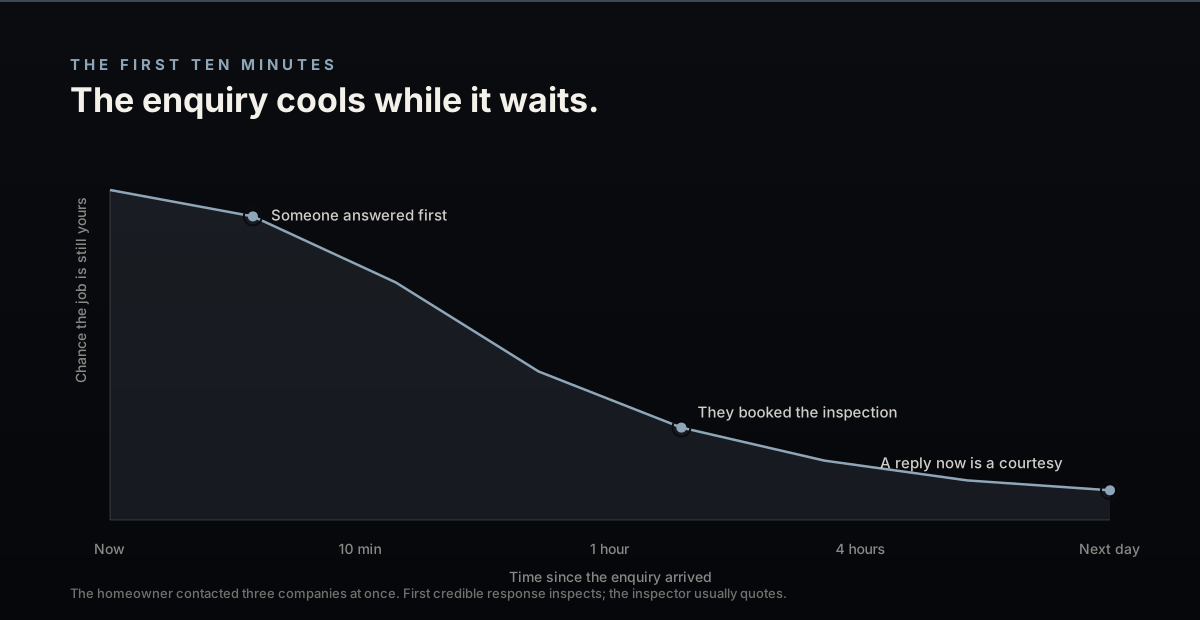
First, response time. A homeowner with water coming through a ceiling contacts several companies. Whoever replies first is usually the one who inspects, and whoever inspects usually quotes. Being second is close to being nowhere.
Second, the quote that goes unchased. Roofing quotes are large enough that people think about them. A quote sent with no follow-up sequence converts far below one that is followed up twice, and most companies do neither consistently because it depends on somebody remembering during a busy week.
Third, the surge itself. When fifty inquiries arrive in two days, a manual process fails exactly when the opportunity is largest. Capacity you cannot answer is revenue handed to a competitor. Both of the first two are covered in more general form in the pieces on response times and quote follow-up.
What the Website Has to Do
- Load fast on a phone on mobile data, because that is where the inquiry is coming from and often from a roof or a driveway.:
- Make the emergency path obvious and separate from the replacement path. Those are different customers with different urgency.:
- Capture the address and photographs at the point of inquiry, so the first call is informed instead of exploratory.:
- Show real work in the area. Proof of local jobs outperforms claims about experience.:
- Answer insurance and financing questions on the page, because for storm damage they are the first thing a homeowner needs to know.:
Photographs at intake matter more than they sound. A form that collects three photographs and an address lets someone triage before driving anywhere, which is the difference between six inspections in a day and three.
In a trade where the customer is contacting three companies at once, the system that answers in two minutes beats the company with the better reputation.
What Sits Behind It
An inquiry should create a record, notify the right person, acknowledge the homeowner immediately, and enter a follow-up sequence that runs whether or not anyone remembers it. None of that is advanced. It is the difference between a form that emails an inbox and a system that owns the process.
The follow-up is worth building carefully because the sales cycle is long enough for a quote to be forgotten. A sequence with two or three properly written touches over two weeks recovers work that would otherwise disappear silently. That is workflow automation, and it is the cheapest revenue in the business because the lead is already paid for.
Being Found When the Storm Hits
Surge demand goes to whoever appears in local results at the moment of the search. That position is not built during the storm; it is built in the quiet months through a fast site, a maintained business profile, consistent details, and a steady flow of reviews. Local search work is an insurance policy that pays out in the week the weather turns.