
A property management company is a triangle with a person in the middle. Owners on one corner, tenants on another, vendors on the third, and every leak, late payment, and lease renewal crosses the middle as a message someone has to route. The economics of the business are set by how much of that routing happens without a human touching it, because the management fee is fixed and the message volume is not.
The Triangle, Corner by Corner
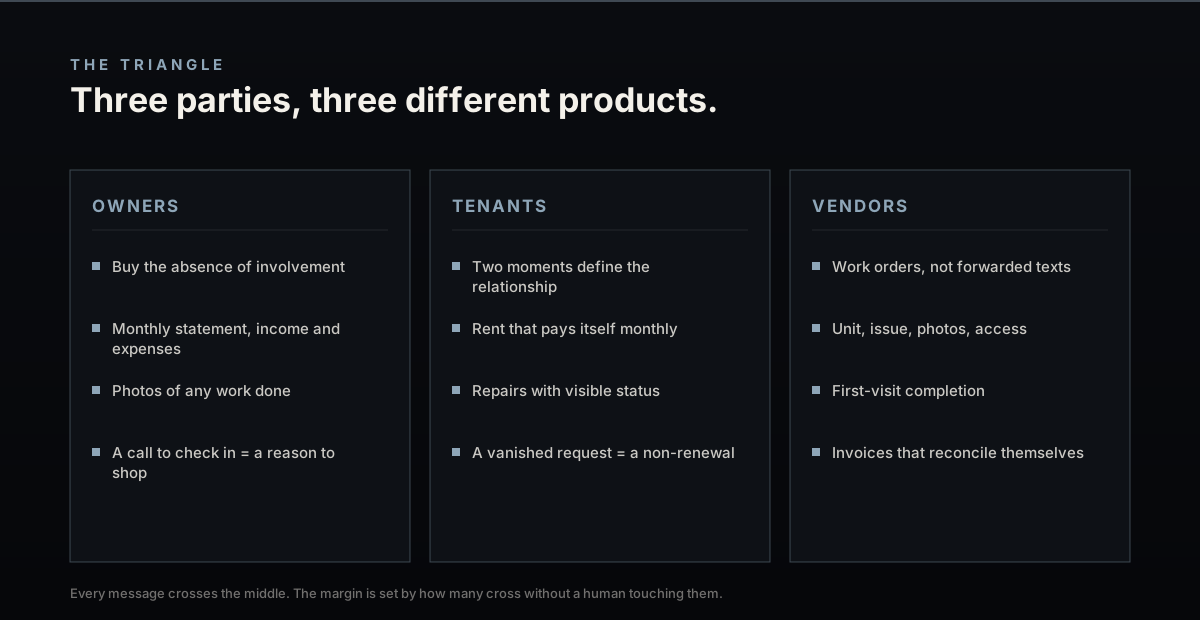
Owners are the customers, and what they buy is the absence of involvement plus the presence of information. An owner who has to call to find out how their property is doing has been given a reason to shop. A statement that arrives monthly, with income, expenses, and photos of any work done, answers the question before it is asked.
Tenants are the product's users, and the entire relationship concentrates into two moments: how rent gets paid and what happens when something breaks. A maintenance request that vanishes into a voicemail becomes an angry review and a non-renewal. One that lands in a system, gets acknowledged, and shows its own status turns the worst moment of the tenancy into evidence the management works.
Vendors are the fulfillment layer. A work order with the unit, the issue, photos, and access instructions gets done on the first visit. A forwarded text gets a phone call back, and the routing person is back in the loop they were supposed to leave.
Where the Hours Actually Go
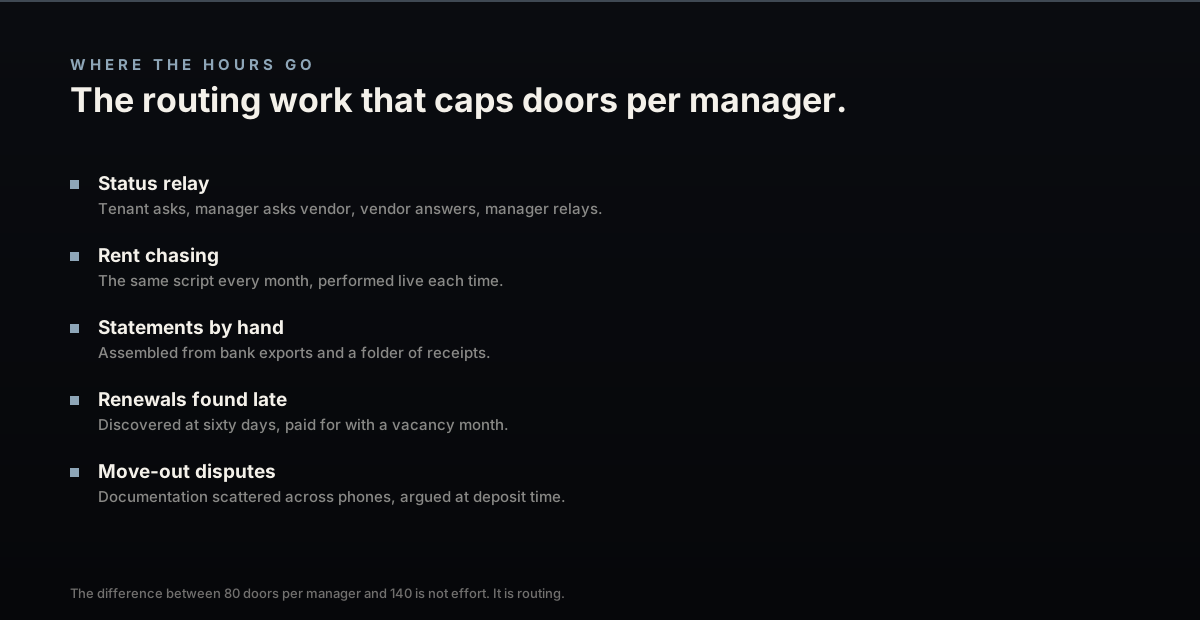
- Status relay: tenant asks, manager asks vendor, vendor answers, manager relays. Four messages where zero were needed.
- Rent chasing that follows the same script every month, performed live each time.:
- Assembling owner statements by hand from bank exports and receipts.:
- Lease renewals discovered sixty days late, at the cost of a vacancy month.:
- Move-in and move-out documentation scattered across phones, disputed at deposit time.:
Each row is automatable, and each one automated raises the number of doors one manager can carry. That number is the whole business model: the difference between eighty doors per manager and a hundred and forty is not effort, it is routing.
The Platform Question, Honestly
Property management platforms are mature, and for the core ledger, buy one: trust accounting is not a thing to rebuild for sport. The gaps that justify building around the platform are the edges where your operation differs: the owner report that actually sells your service, the maintenance triage flow with your vendors and your rules, the leasing pipeline that treats an empty unit like the expiring inventory it is, and the website that turns owner inquiries into signed management agreements.
That last one is the growth lever most firms ignore. Owners shopping for management are comparing three companies whose sites all say full service and responsive. The site that shows the actual owner statement, the actual tenant portal, and the actual maintenance turnaround numbers is proving what the others are claiming. In a trust business, shown beats said.