
Plumbing demand splits into two businesses that happen to share a truck. Emergency work is won on response time and priced on urgency. Planned work, the repipes and remodels and water heater replacements, is won on quotes and follow-up. Most plumbing companies run both through one phone line and one person's memory, and both leak for different reasons.
The Missed Call Is the Whole Story
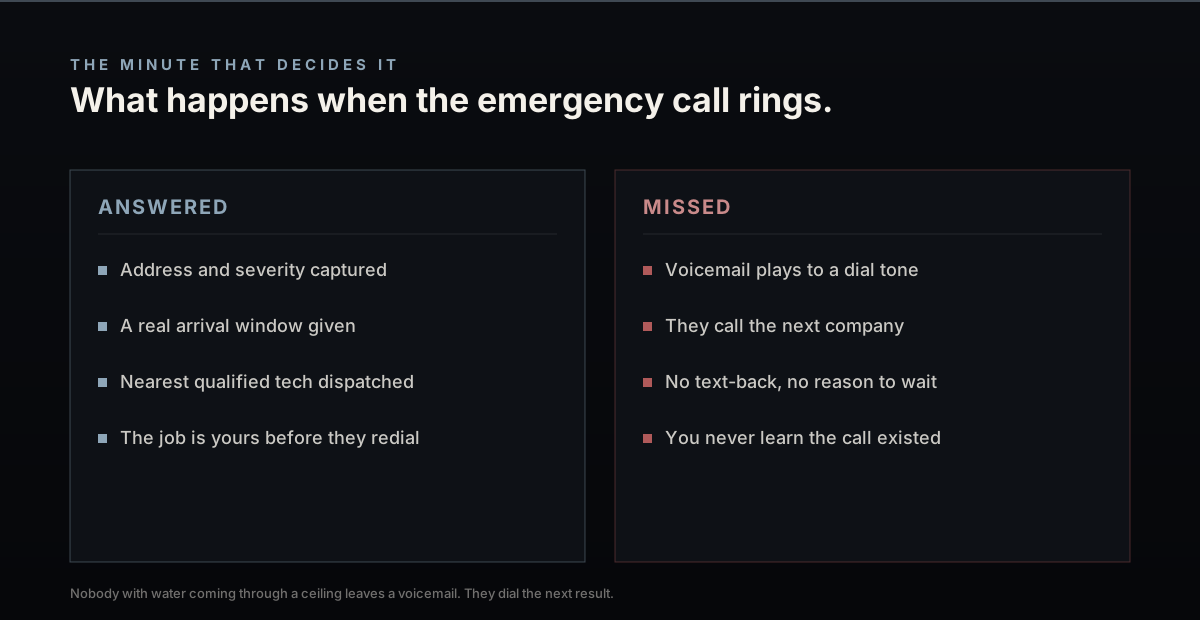
When water is coming through a ceiling, nobody leaves a voicemail and waits. They hang up and dial the next result. A missed emergency call is not a delayed job, it is a job that went to a competitor in under a minute, and it happened while your best technician was elbow-deep in a crawl space with no way to know the phone rang.
This is why answer rate is the single most valuable number a plumbing company can measure, and almost none do. The fixes stack: a call flow that rings more than one person, an after-hours path that can triage and book instead of taking messages, and a text-back that fires the moment a call is missed so the homeowner has a reason to wait. Every one of those is plumbing the business rather than the house, and every one is cheaper than the jobs currently walking away.
Emergency and Planned Work Need Different Machines
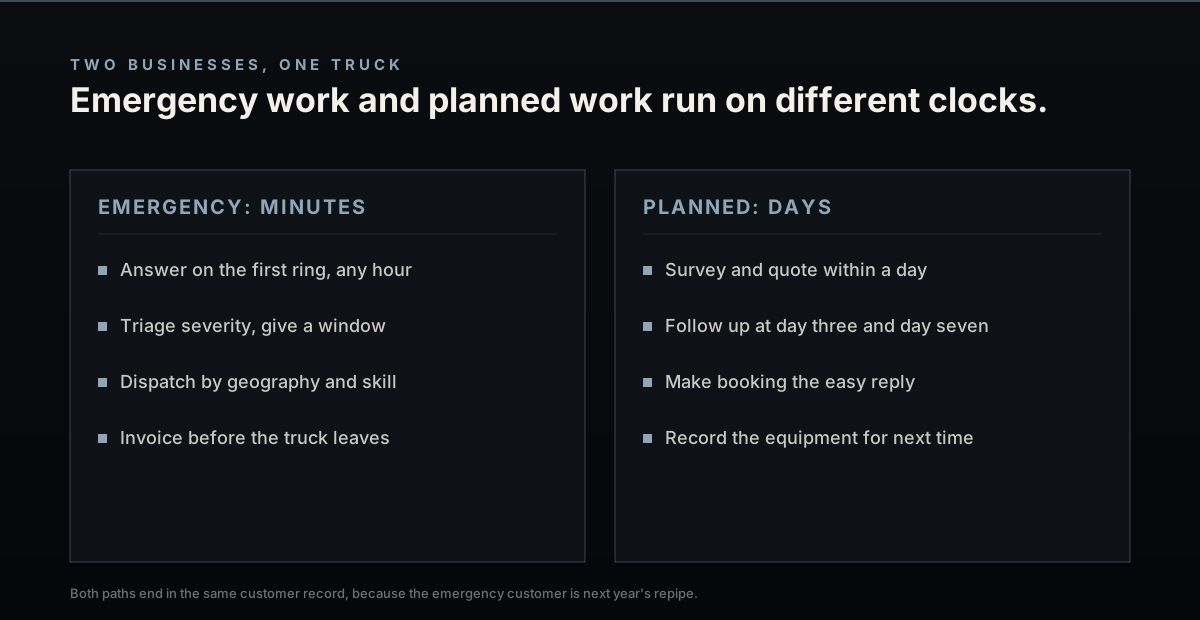
The emergency path needs speed: capture the address, triage severity, give a real arrival window, and dispatch by geography so the nearest qualified tech takes it. Nothing about that flow should depend on a person being free to coordinate it.
The planned path needs persistence. A water heater quote is compared against two others and thought about for a week. Whoever follows up during that week usually wins, and most shops never do, because follow-up is nobody's job on a busy Tuesday. A written sequence that runs on its own recovers quotes that would otherwise expire silently, the same pattern we covered in the general analysis of quote follow-up.
- Emergency: answer, triage, window, dispatch. Minutes matter.
- Planned: quote fast, follow up twice, make booking the easy next step. Days matter.
- Both: every job lands in one customer record, because the emergency customer is next year's repipe.
The Record That Compounds
A plumbing customer is not a transaction. The house has a water heater with an age, pipes with a material, and a history of what went wrong. A shop that records equipment against the address can send the water heater replacement letter in year nine instead of competing for the emergency in year eleven. That is the cheapest revenue in the trade, and it only exists if the data was captured while the tech was standing next to the tank.
What to Buy and What to Build
A field service platform handles the day: schedule, dispatch board, invoicing, payments. For a shop under a handful of trucks, buy one and move on. The gaps that eventually justify building are the same three every time: the intake path (platforms assume the call was answered), the follow-up engine (platforms record quotes, they do not chase them), and the equipment-level customer record that feeds next decade's work.
The website sits in front of all of it. It needs to load instantly on a phone, put the emergency number everywhere, capture address and photos on the planned-work path, and prove locality with real jobs in real neighborhoods. A plumbing site that reads like a brochure is a missed call with better typography.
None of this is exotic engineering. It is a booking and intake layer, an owned customer database, and automation running the sequences, wired into whatever platform runs the trucks. The shops that grow are not better at plumbing. They answer faster, follow up always, and remember every house they have ever been in.