
Many service business owners run their companies by looking backward. They evaluate performance by checking bank balances daily and reading profit-and-loss statements compiled by their accountant weeks after the month ends. While this financial data is necessary, it is a lagging indicator. It tells you what happened last month, but does nothing to help you catch operational leaks in real time.
Lagging vs. Leading Indicators
Harvard Business School research on management control systems and executive dashboards emphasizes that sustainable growth requires tracking leading indicators. These include daily lead velocity, form-to-booking conversion rates, technician schedule packing efficiency, and response latency. If your lead conversion rate drops by 10% on Monday, you need to know on Tuesday to fix the issue, not three weeks later when you notice a drop in monthly revenue.
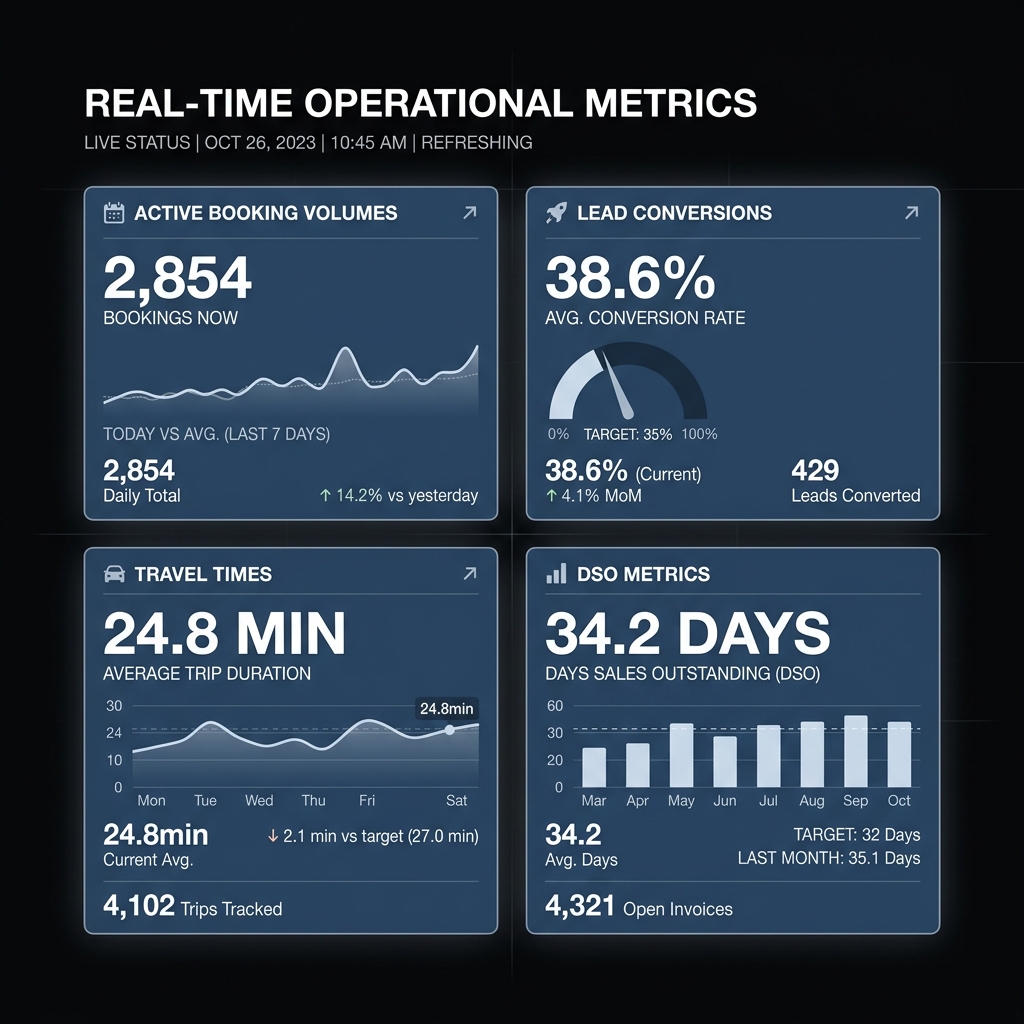
Managing operations using only your bank statement is like driving a car by looking in the rearview mirror.
Declaring Leading Metric Pipelines
To build a real-time dashboard, you must configure SQL pipelines that calculate operational metrics on the fly. Below is a SQL query showing how to calculate the average response latency (in minutes) between lead intake and initial client contact, providing a real-time warning when follow-ups are lagging:
SELECT
  DATE(created_at) as date,
  AVG(EXTRACT(EPOCH FROM (contacted_at - created_at)) / 60) as avg_response_latency_minutes
FROM leads
WHERE contacted_at IS NOT NULL AND created_at >= NOW() - INTERVAL '7 days'
GROUP BY DATE(created_at)
ORDER BY date DESC;
This real-time visibility allows you to spot booking drop-offs and dispatch inefficiencies immediately, protecting daily profit margins before they turn into end-of-month losses.