
Nobody hires a mover twice a year. The customer arrives anxious, comparing three companies they cannot tell apart, in an industry whose reputation precedes it. In that market, the deciding signal is rarely the lowest number. It is the company whose process feels like it will not produce a surprise: a precise quote, a firm date, a crew that shows up sized for the actual job.
The Estimate Is the Product Being Judged
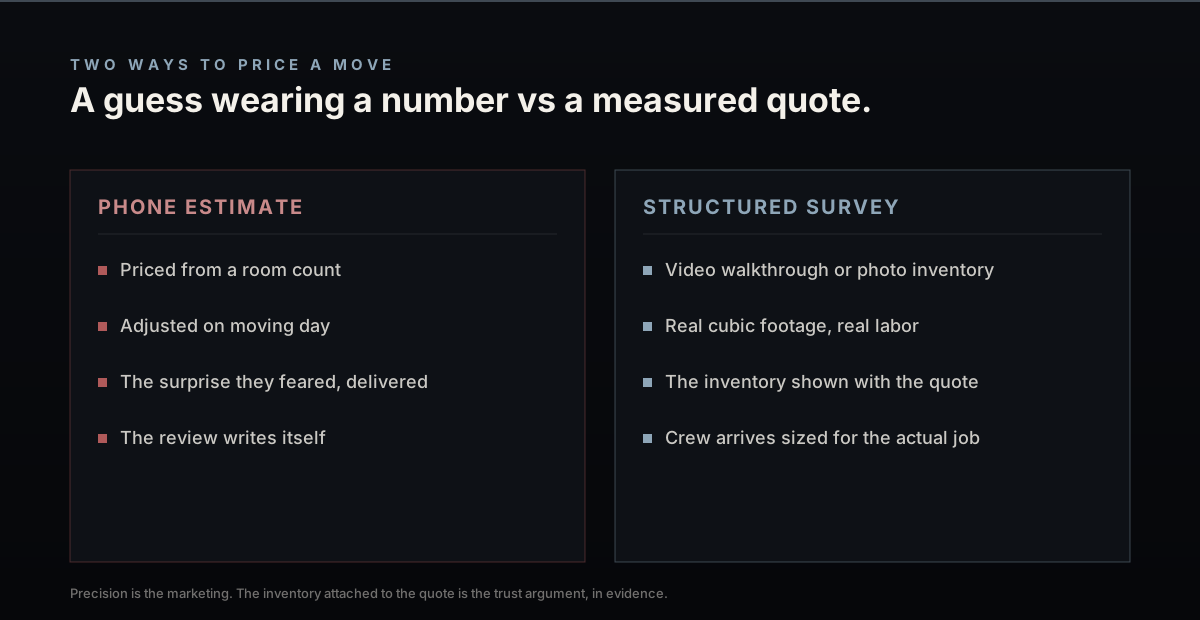
A price given over the phone from a room count is a guess wearing a number. Guesses produce day-of adjustments, and a day-of adjustment on moving day is the exact surprise the customer feared, delivered at the moment they are least able to refuse it. The review that follows writes itself.
A structured survey removes the guess: a video walkthrough or a photo inventory, room by room, feeding a real cubic-footage and labor estimate. The customer sees the inventory attached to the quote, which does two jobs at once. It makes the price defensible, and it quietly demonstrates that this company measures where the others estimated. Precision is the marketing.
Speed Still Decides Who Gets Considered
The moving inquiry has a deadline attached by definition: the lease ends, the closing happens, the job starts. A customer with six weeks to move books within days of starting to look, so the standard lead-response math applies at full force. The inquiry answered in minutes gets the survey booked; the one answered in two days finds the date already taken by a competitor's calendar.
- Instant acknowledgment with the survey as the next step, not a callback promise.:
- The survey bookable online, evenings included, because that is when movers get shopped.:
- The quote delivered within a day of the survey, while the comparison is still open.:
- A follow-up sequence tuned to the move date: closer dates get faster touches.
The Deposit Is the Booking
A verbal yes on a moving date is worth little on both sides. The customer keeps shopping; the company holds truck and crew capacity against a promise. A deposit taken at acceptance converts the maybe into inventory: the date is sold, the truck is committed, and cancellations drop to the genuine emergencies. The same mechanics that fix no-shows in appointment businesses fix date-holding here, with the added force that a moving date is scarce in a way an appointment slot is not. A Saturday at month-end sold twice is a catastrophe; a deposit makes double-selling structurally impossible.
From Quote to Crew Without Re-Entry
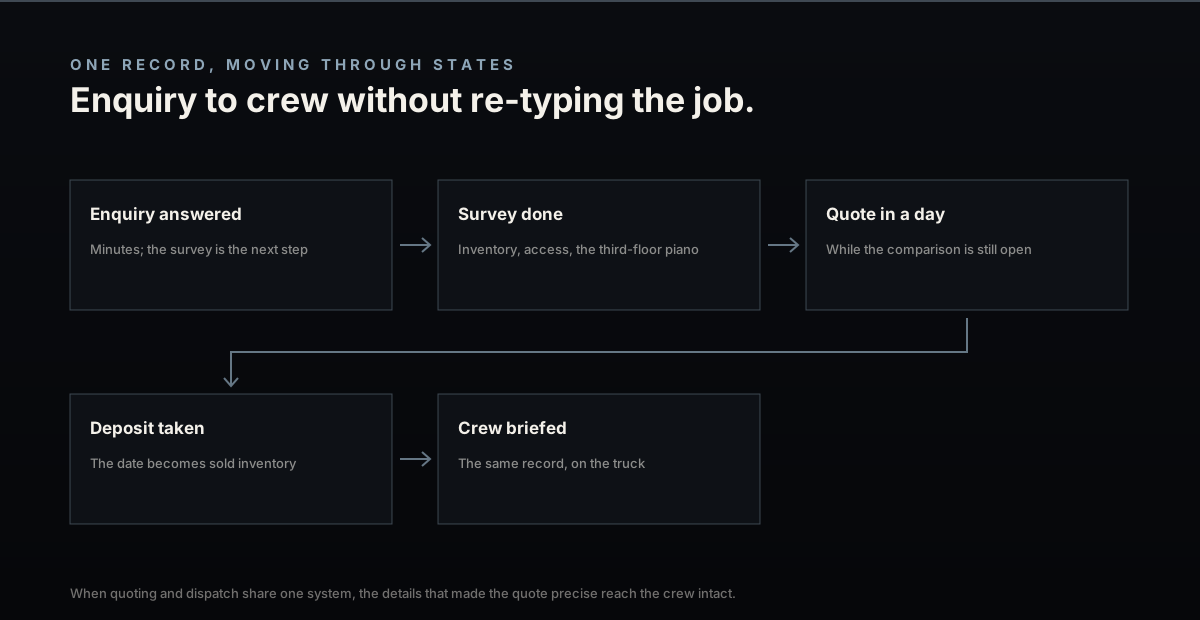
The operational tail matters as much as the sale. The inventory that priced the job should be the same document the crew sees: item count, access notes, the piano on the third floor, the parking situation photographed during the survey. When the quote system and the dispatch system are the same system, the crew arrives sized and briefed, and the job runs to the estimate that won it. When they are separate, someone re-types the job into a whiteboard, and the details that made the quote precise die in transit.
The pattern across the whole pipeline is one record moving through states: inquiry, survey, quote, deposit, dispatch, done, review request. Each transition automated, each state visible to the customer. In a distrusted industry, the company that shows its process is borrowing against every competitor who hides theirs.