
Landscaping is a business with a deadline built into the sky. Demand arrives in a spring surge, compresses into a summer of execution, and falls off a cliff in November. The companies that grow are not the ones that work hardest in July. They are the ones whose systems are ready in March, because the season's revenue is largely decided in its first six weeks.
The Spring Surge Is a Quoting Contest
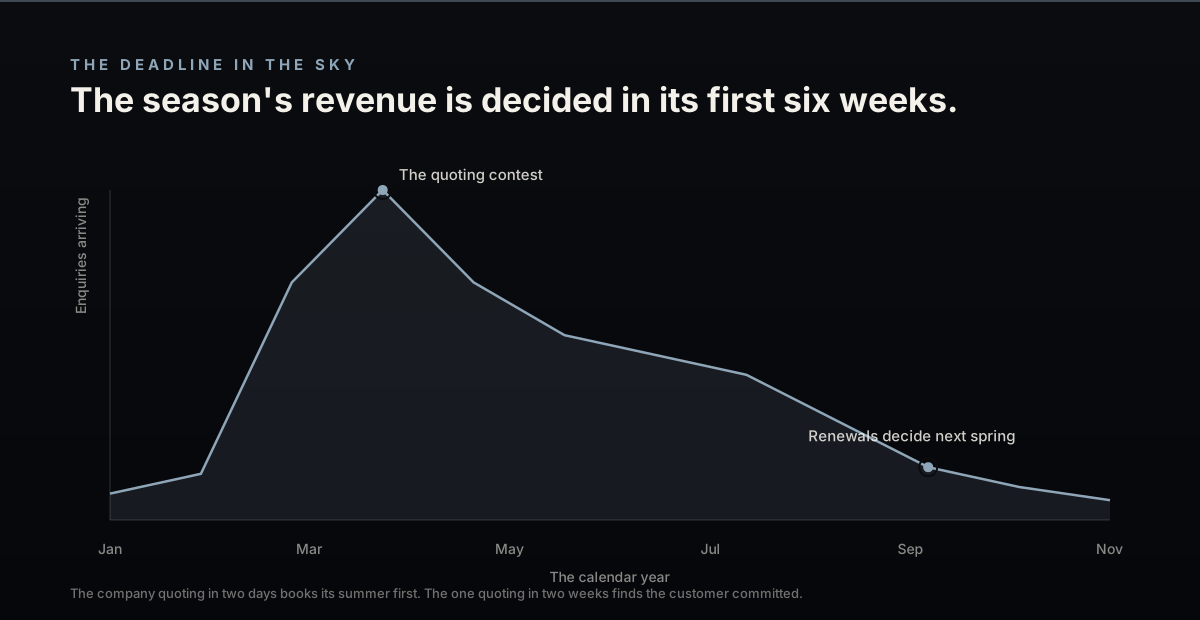
When the snow melts, every homeowner who spent the winter deciding calls three companies in the same week. The quoting backlog that follows is where seasons are won and lost: the company quoting within two days books its summer first, and the company quoting in two weeks arrives to find the customer already committed. Speed here is not politeness, it is market share.
The mechanics that compress quote time: property measurement from satellite imagery before the visit, price rules per service so a quote is assembled from inputs rather than composed from experience, and templates that make the written quote a twenty-minute task instead of an evening one. Then the follow-up sequence, because a spring homeowner sitting on three quotes responds to whoever nudges first.
Routes Are Margin You Can See From the Truck
A maintenance operation's costs are dominated by drive time between properties, and a route built by history rather than geography donates hours of it daily. Twenty weekly properties visited in the order they signed up is a map that looks like string art. The same twenty clustered by neighborhood and day recovers enough windshield time to add properties without adding a crew, which is the quiet difference between a route that profits and one that just stays busy.
- Cluster standing visits by neighborhood, assign neighborhoods to days.:
- Quote new recurring work with the route in view: a property two streets from an existing stop is worth more than one across town.
- Let weather delays shift whole route days, not individual scrambles.:
- Track actual time per property, because the lawn that takes twice the estimate is eating a scheduled profit.:
The Contract Conversion Is the Whole Business Model
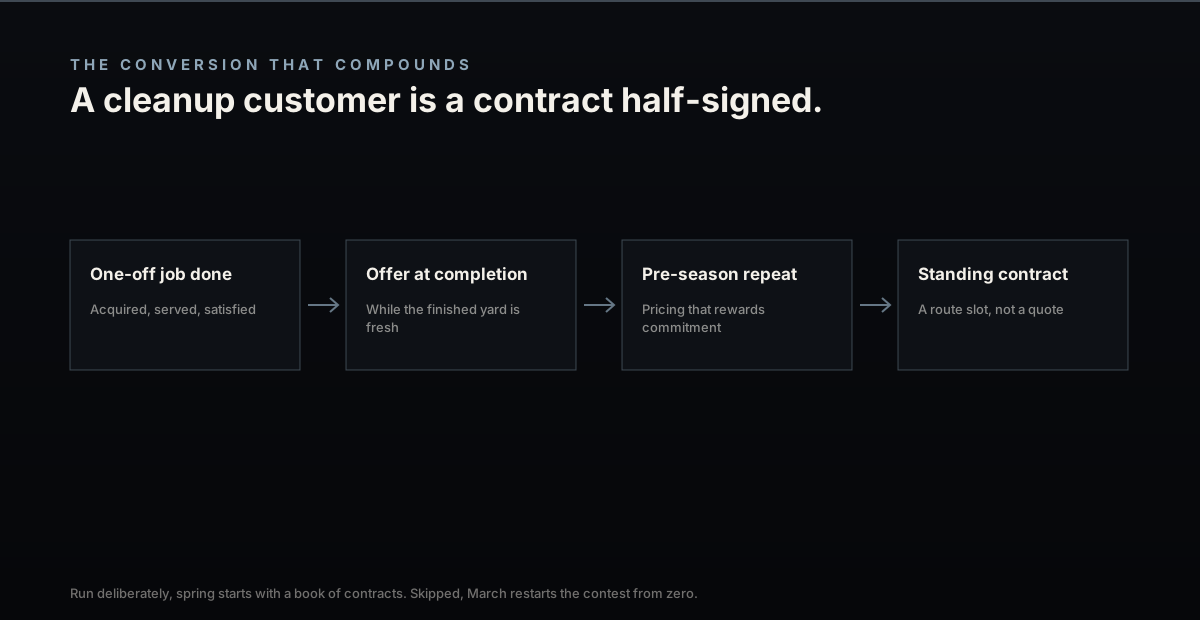
A one-off cleanup customer is a lead the company already paid to acquire and already proved itself to. The conversion into weekly maintenance or an annual contract is where the enterprise value lives, and it is a follow-up motion: the offer made at job completion while satisfaction is fresh, repeated once before the next season with pricing that rewards commitment. Companies that run this conversion deliberately enter spring with a book of contracts; companies that do not re-fight the quoting contest from zero every March.
The winter gap is the same motion pointed at retention: snow services where the market supports it, or the early-renewal offer that trades a discount for certainty. Either way the objective is identical, making next season's revenue exist before the season does. The software that matters here is unglamorous, a customer record that knows every property's history, and sequences that fire at completion, at season end, and at renewal. The weather sets the calendar. The system decides how much of the calendar is already sold.