
Every remodeling contractor has watched a project go sideways with a client who was happy a month earlier. The work was fine. The schedule slipped a normal amount. What actually broke was information: the client stopped knowing what was happening in their own house, filled the silence with worry, and by the time the tile question surfaced, every small irritation had compounded into distrust.
Why Remodel Clients Go Quiet-Angry
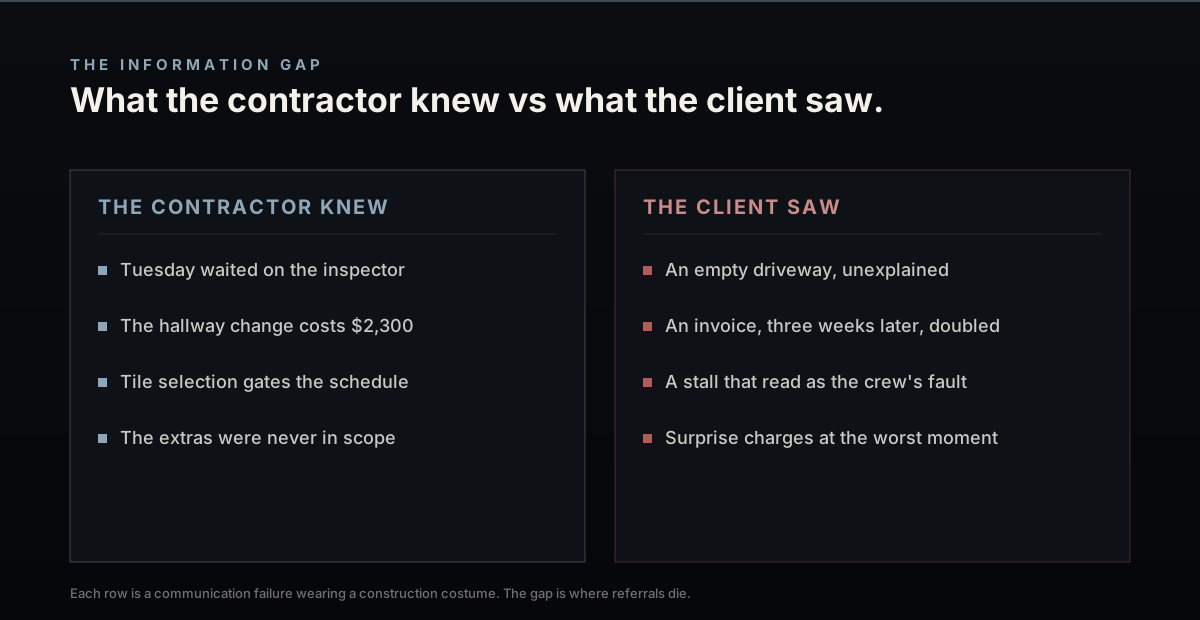
- Nobody showed up Tuesday and nobody said why. The crew was waiting on the inspector; the client was watching an empty driveway.:
- A verbal change agreed in the hallway appeared on an invoice three weeks later, twice the remembered size.:
- The selection deadline the client never knew was a deadline stalled the whole job, and the stall read as the contractor's fault.:
- The final invoice arrived with items the client thought were included, at the exact moment goodwill matters most.:
Each row is a communication failure wearing a construction costume. The contractor knew the inspector was the holdup. The client did not, and the gap between those two states is where referrals die.
The Weekly Rhythm Beats the Perfect Update
The fix is not more communication, it is scheduled communication. A short update on a fixed day, every week, whether or not anything dramatic happened: what got done, what happens next, what is blocked and by whom, and any decision needed from the client with its deadline. Predictability is the product. A client who knows Friday brings the update stops manufacturing worry on Wednesday.
Photos carry the update. A client living around a subfloor for two weeks sees no progress; the same two weeks told as photos of the plumbing rough-in and the passed inspection is visible momentum. The crew is already taking the photos. The system's job is making them reach the client attached to context.
Change Orders Are a Signature Problem
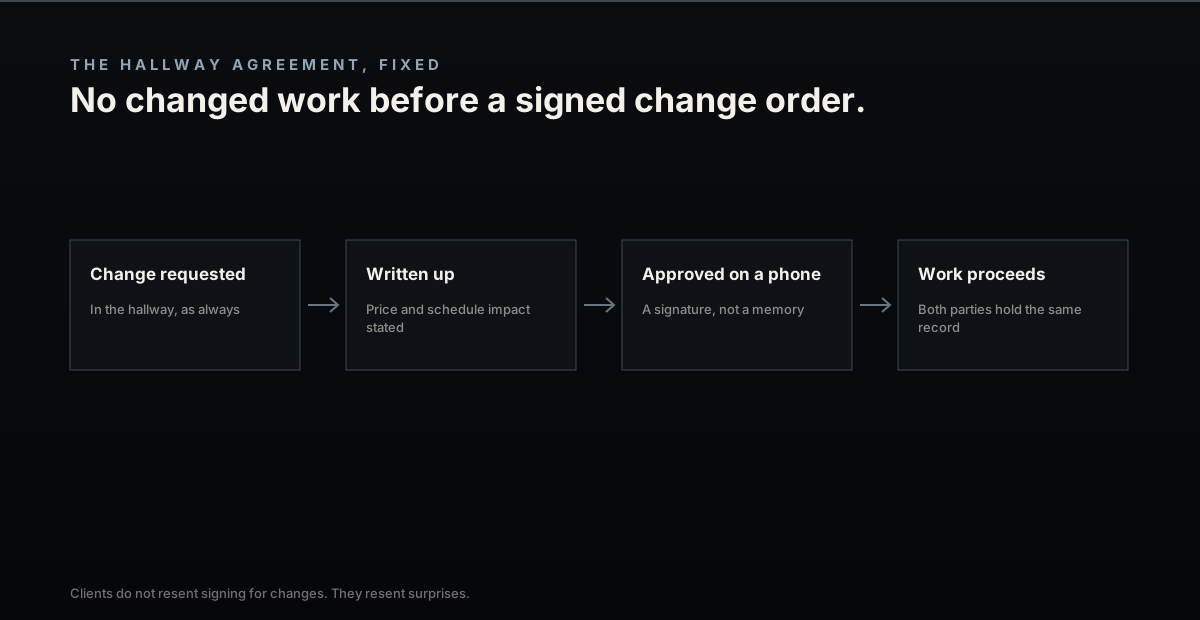
The hallway agreement is the most expensive conversation in remodeling. Scope changes, price changes, nothing is written, and both parties remember it differently under invoice light. The discipline that fixes it is mechanical: no changed work starts before a written change order with price and schedule impact is approved on a phone screen. Contractors resist this as bureaucracy until they notice the pattern: the change order is not paperwork about trust, it is the thing that preserves it. Clients do not resent signing for changes. They resent surprises.
The same record solves the draw conversation. Progress payments tied to milestones everyone can see, with photos attached to the milestone, turn the money conversation from a negotiation into a confirmation.
The Referral Machine Is Just the Record, Replayed
Remodeling runs on referrals and reviews, and both are downstream of how the project felt, which is downstream of communication. A finished project whose record contains every update, photo, and signed change is also a portfolio entry, a review request with specifics, and a case study for the website. The contractor selling the next kitchen shows the last kitchen's story, week by week. Against competitors selling before-and-after photos, the one who can show the middle is making a different argument: this is what it is like to work with us, in evidence.
None of this needs a platform built for skyscrapers. It needs a client-facing record per project, sequences that enforce the weekly rhythm, change orders that block un-approved work, and a customer database that remembers who owes a review and who referred whom. The tools are modest. The discipline they enforce is the entire difference between a contractor with a waiting list and one with a lead problem.