
Cash flow is the lifeblood of a service business. Yet, many providers operate with high accounts receivable (AR) balances. A job gets completed, but the invoice isn't drafted until the end of the week, and once sent, it sits in the client's inbox for weeks. Chasing payments manually wastes admin time and ties up working capital that could be used for growth.
The Latency of Payment Cycles
Research from Dun & Bradstreet on corporate payment trends shows that Days Sales Outstanding (DSO), the average number of days it takes to collect payment after a job is completed, is directly tied to invoice latency. If an invoice is sent immediately upon job completion, 80% of payments are collected within 24 hours. If invoicing is delayed by just 5 days, the average DSO jumps to 28 days. The client forgets the service value, moves the invoice to their finance queue, and delays payment.
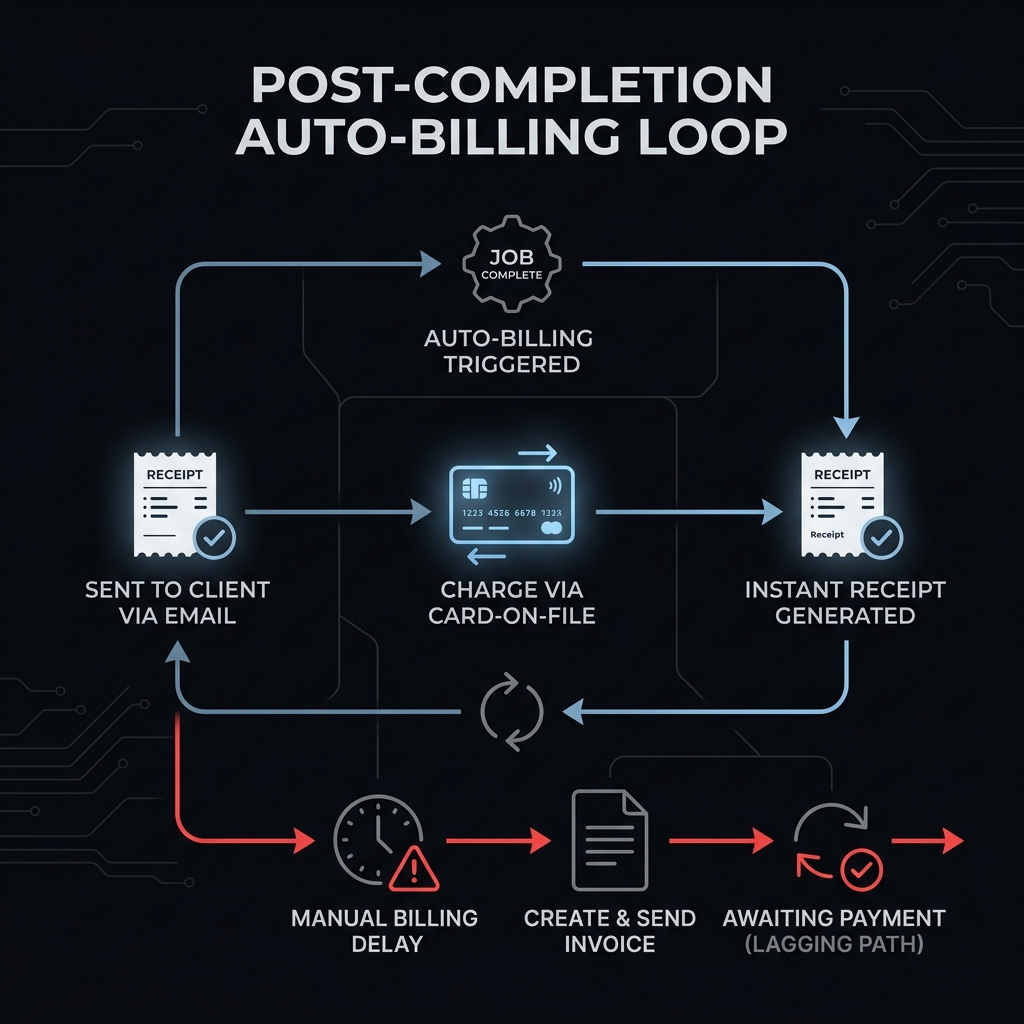
Delayed invoicing is an interest-free loan to your customers. The longer you wait to invoice, the harder it is to collect.
Stripe API Auto-Billing Configuration
The solution is to capture payment details upfront and process billing automatically upon job completion. Below is a Node.js script demonstrating how to charge a client's card on file via the Stripe API when a booking status is updated to 'Completed':
const stripe = require("stripe")(process.env.STRIPE_SECRET_KEY);

async function processAutoBilling(customerId, amountInCents, bookingId) {
  const customer = await stripe.customers.retrieve(customerId);
  const paymentIntent = await stripe.paymentIntents.create({
    amount: amountInCents,
    currency: "usd",
    customer: customerId,
    payment_method: customer.default_payment_method,
    confirm: true,
    off_session: true,
    metadata: { bookingId: bookingId }
  });
  return paymentIntent;
}
By automating your invoicing and billing loops, you accelerate payment velocity, minimize DSO, and eliminate the administrative task of chasing outstanding payments.