
Search for a plumber, a barber, or a med spa near you. Before any website appears, three business listings sit in a box with a map. Most people choose from those three and never scroll. That box is the local pack, and ranking in it is a different discipline from ranking a web page. The shorthand for it is MEO: map engine optimization.
MEO and SEO answer to different signals
Classic SEO is largely about a page: what it covers, how it is structured, how fast it loads, and who links to it. Those signals decide where a URL lands in the standard results.
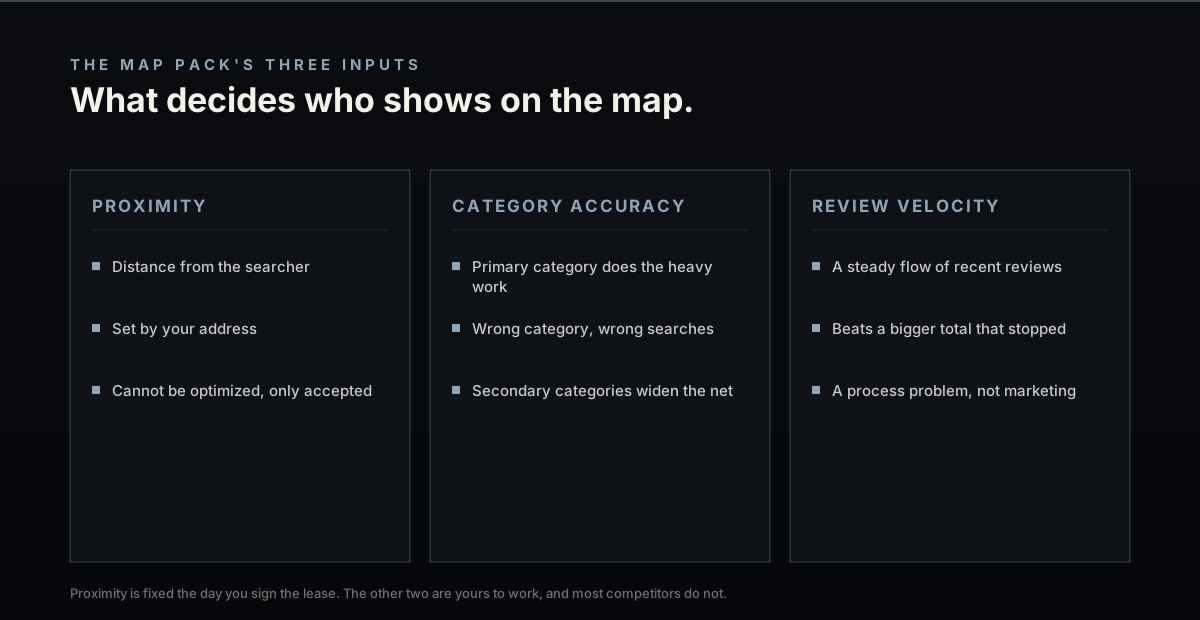
The local pack is ranking a business entity, not a page. The dominant inputs are different: how close the business is to the person searching, how accurately the profile describes what the business does, and how much recent review activity it has. This is why a business with an excellent website can be invisible in the map pack, and why a business with a mediocre website can own it.
Proximity is the input you cannot optimize
Distance between the searcher and the business is weighted heavily, and no amount of work changes where your premises are. This is worth internalizing early, because it sets a realistic ceiling. You are not going to rank in the pack for a suburb an hour away by writing content about it.
What proximity does mean is that the searches you can win are the ones near you, and that a second real location genuinely opens a second market in a way a location page alone does not.
Category accuracy does more work than most owners expect
The primary category on a Google Business Profile is one of the strongest signals available, and it is frequently set once at registration and never revisited. A business that describes itself with a broad category competes for broad queries it will lose. A business that picks the category matching what it actually sells competes where it can win.
The related failure is a mismatch between the profile and the website. If the profile lists services the site never mentions, the two do not corroborate each other. Alignment between them is cheap to fix and frequently neglected.
Review velocity, not review count
A business with 400 reviews and nothing in the last year reads as coasting. A business with 90 reviews and several each month reads as active. Recency and rate carry weight that a static total does not, which is why the durable fix is a system that requests a review at job completion rather than a periodic push to catch up.
The timing matters as much as the automation. A request that arrives while the work is fresh converts far better than one that arrives a week later, which is an argument for triggering it from your job or booking system rather than sending a batch on Fridays.
Where location pages help, and where they backfire
Location pages are a legitimate part of local search, but only when they are real pages. A page with genuine content about the service in that area gives a search engine something to rank and a visitor a reason to stay.
The pattern that fails is generating twenty near-identical pages by swapping a city name into the same template. That is recognizable, it adds no information, and it can drag down the rest of the site. Fewer pages with real content beats more pages with none.
A practical order of work
- Claim and verify the profile, and confirm name, address, and hours are exact:
- Set the primary category to what you actually sell, then add secondary categories:
- List services on the profile that match the services on the website:
- Automate a review request triggered at job completion:
- Build location pages only for areas where you have something specific to say:
- Keep the website fast and technically sound, since it still backs the entity:
A business with a good website and a neglected profile loses to a worse business with a well-maintained one, every time, for every near-me search.
MEO is not a replacement for SEO. It is the part of local search that most owners never touch, sitting above everything they have paid for, ranked on signals their website does not control.