
A new patient is worth years of recurring treatment, which makes the cost of a website that does not convert a compounding number instead of a one-off. Most dental sites are built to reassure: a photograph of the team, a list of treatments, a phone number in the corner. That was adequate when the alternative was a directory listing.
The patient's behavior has changed. They are searching on a phone, often outside opening hours, comparing two or three practices, and deciding based on what each site answers without making them call.
The Questions That Decide It
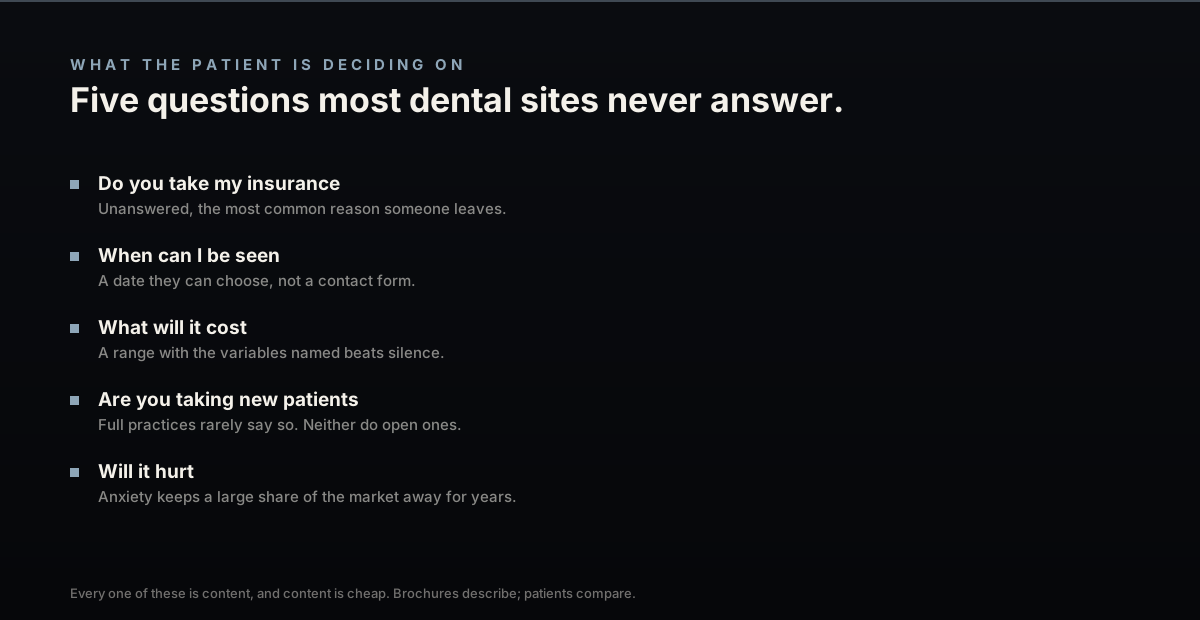
- Do you take my insurance. Unanswered, this is the most common reason someone leaves a dental site.:
- When can I be seen. Not a contact form. A date they can see and choose.:
- What will it cost. A range with the variables named beats silence, and silence is what most practices offer.:
- Are you accepting new patients. Practices that are full rarely say so, and practices that are not rarely say that either.:
- Is this going to hurt. Anxiety is the reason a large share of the market has not been in years, and a site that addresses it directly is talking to real demand.:
Every one of those is content, and content is cheap. The reason they go unanswered is that the site was built as a brochure, and a brochure describes the practice instead of answering the patient.
Booking Is Where Practices Lose Most
A request form is not a booking. It creates work for the front desk, a phone call the patient may not answer, and a gap during which they book somewhere else. Real availability, shown and reserved on the spot, is the difference, and it has to be genuine availability, not a request queue with a calendar drawn on it.
That means the site has to reach the practice management system, or a booking layer that reconciles with it. New patient appointments need their own duration and their own slot rules, because a new patient exam is not a hygiene visit and treating them as the same appointment type is how a schedule falls apart.
A contact form asks the patient to wait. Every practice they are comparing you to is one tap away.
Being Found Is Half of It
Dental search is local, competitive, and increasingly answered before anyone reaches a website. A well-maintained business profile, consistent details across directories, real reviews arriving steadily, and a site fast enough to load on a phone are the inputs. This is the local search work, and it is not separate from the website; the site is what the profile points at.
Reviews deserve their own mention because the flow of them matters more than the total. A practice with a steady arrival of recent reviews outranks one with more reviews that stopped two years ago, which is a process problem and not a marketing one.
What This Adds Up To
- Insurance and pricing answered on the page, in plain language.:
- Real booking with new-patient slot rules, not a request form.:
- Pages that load fast on a mid-range phone on mobile data.:
- Intake forms completed before arrival instead of on a clipboard.:
- A patient record the practice owns, so recall and reactivation are things you run instead of hope for.:
That last point is where the long-term value sits. A practice that can identify every patient who has not been seen in eighteen months, and contact them properly, has an asset that a brochure site cannot produce. Reactivation is usually the cheapest revenue available to an established practice.